Types of Beehives Explained: A Complete Overview
Types of Beehives Explained: A Complete Overview
Anyone who starts researching backyard beekeeping quickly runs into the same wall: there isn't just one kind of beehive. There are several, each built around a different philosophy of how bees should be housed and how much the beekeeper should intervene. Understanding the types of beehives available is one of the first real decisions a new beekeeper faces, and it shapes almost everything that follows, from the tools you buy to how often you'll be opening the hive.
This guide exists to make sense of that decision. Rather than trying to explain every hive style in exhaustive detail on a single page, it lays out the landscape so you can see how the major hive types relate to one another and which one deserves your attention first. Think of it as a map rather than a manual.
By the end, you should have a clearer sense of which sub-topic answers your specific question, whether that's a straightforward langstroth vs top bar hive comparison or something more specialized like hive placement or paint color.
Topic Overview
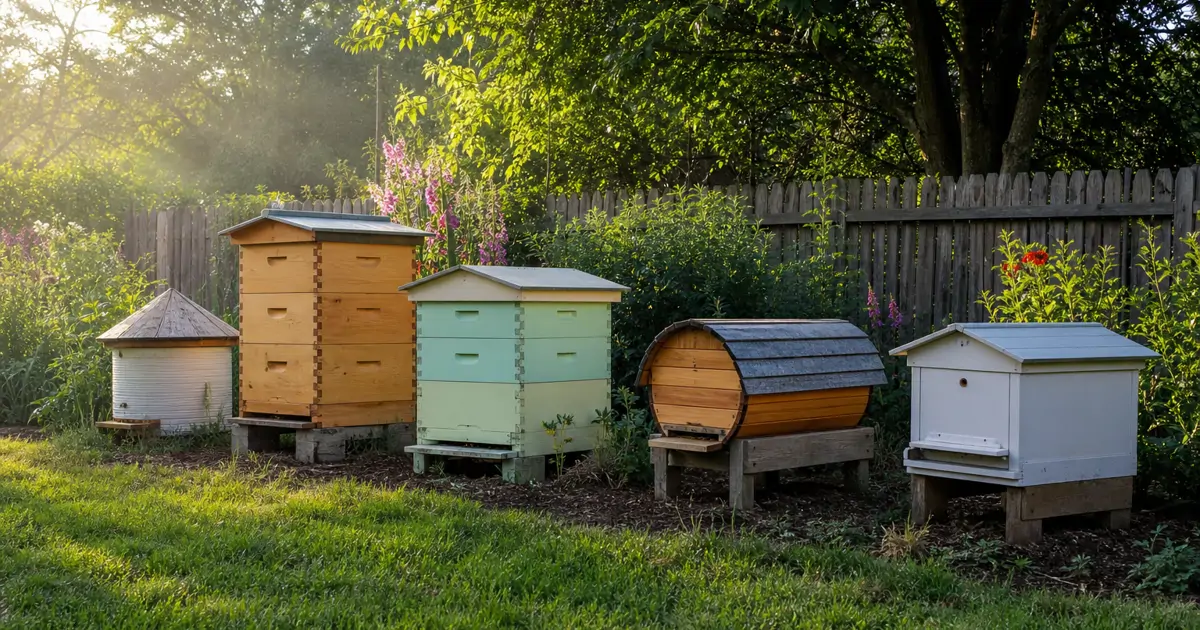
Backyard beehives generally fall into a handful of design families, each with its own history and its own tradeoffs. The Langstroth hive, with its stacked rectangular boxes and removable frames, is by far the most common in the United States and the design most new beekeepers encounter first. Top bar hives take a more horizontal, low-intervention approach, while the Warre hive borrows ideas from both traditions but follows its own logic around box additions and bee behavior. Then there are newer entrants like the Flow Hive, which reimagines harvesting rather than the basic hive structure itself.
Beyond the core hive design, readers often need to make secondary decisions: what material the hive should be built from, how tall the stand should sit, what color to paint the exterior, and whether they're starting with a nucleus colony or a full established hive. None of these choices exist in isolation. A beginner choosing a beehive type is really choosing a whole ecosystem of related decisions, and that's exactly why this cluster of articles exists.
Common challenges at this stage include feeling overwhelmed by conflicting advice, not knowing which hive suits a small urban yard versus a rural property, and underestimating how much the choice affects long-term maintenance. The sections below are organized to address each of these concerns directly.
Langstroth Hive vs Top Bar Hive
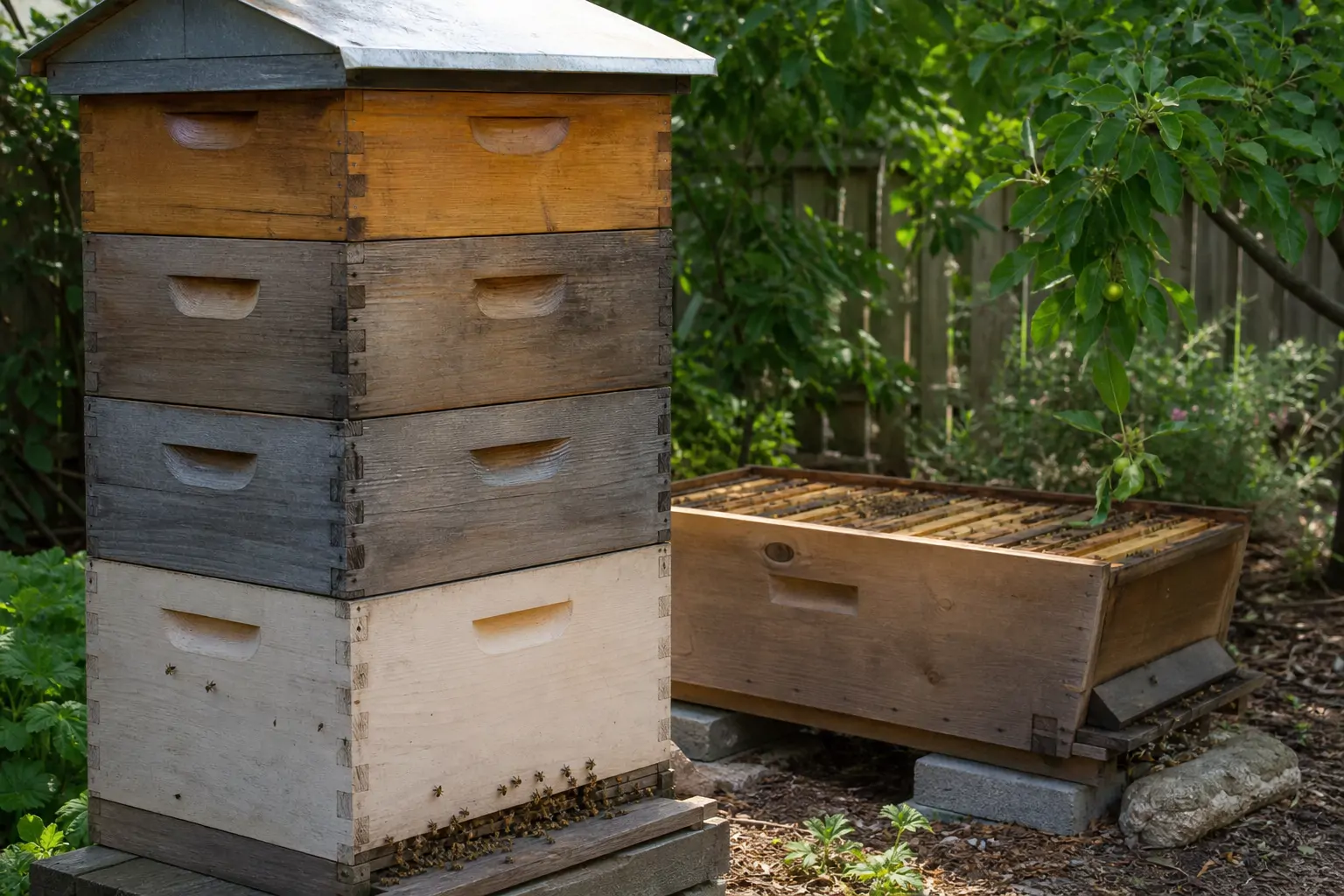
This is usually the first fork in the road for anyone comparing beehive types explained side by side. The Langstroth design uses vertical stacked boxes and removable frames that support honey extraction with mechanical equipment, while the top bar hive is horizontal and relies on bars rather than full frames, encouraging a more hands-off, natural-comb approach. A dedicated langstroth hive vs top bar hive comparison walks through yield expectations, cost, and maintenance style in far more depth than is useful here, but it's the natural starting point for most beginners weighing their first hive purchase.
Warre Hive Explained
The Warre hive sits somewhere between the Langstroth and the top bar in philosophy. It stacks boxes like a Langstroth but adds new boxes at the bottom rather than the top, which changes how bees build comb and how often the beekeeper needs to intervene. Readers drawn to a more minimal-intervention, bee-centered approach without going fully horizontal often find that warre hive explained content answers their specific questions about box order, quilt boxes, and ventilation.
Flow Hive Pros and Cons
The Flow Hive isn't really a different hive family so much as a modification to the Langstroth frame system, designed to let honey be drained from the hive without fully opening it or using an extractor. It has become popular partly because of its convenience, but it also carries a higher price tag and some debate about whether it changes the beekeeping experience for better or worse. Anyone weighing flow hive pros and cons should look closely at cost versus the actual time saved before committing.
Top Bar Hive for Beginners
Some readers are drawn to top bar hives specifically because they want a simpler, less equipment-heavy entry point into beekeeping, or because they're interested in a design that doesn't rely on manufactured frames. A guide built around top bar hive for beginners covers the practical side: what to expect in your first season, how comb management differs from a Langstroth setup, and what tools are actually necessary versus optional.
Langstroth Hive Setup
Once someone has settled on a Langstroth hive, the next question is almost always practical: what does the box actually need, and how is it assembled and arranged before bees arrive? Content focused on langstroth hive setup walks through the physical components, from bottom board to inner cover, and how they fit together for a functioning colony.
Best Beehive Material Wood vs Plastic
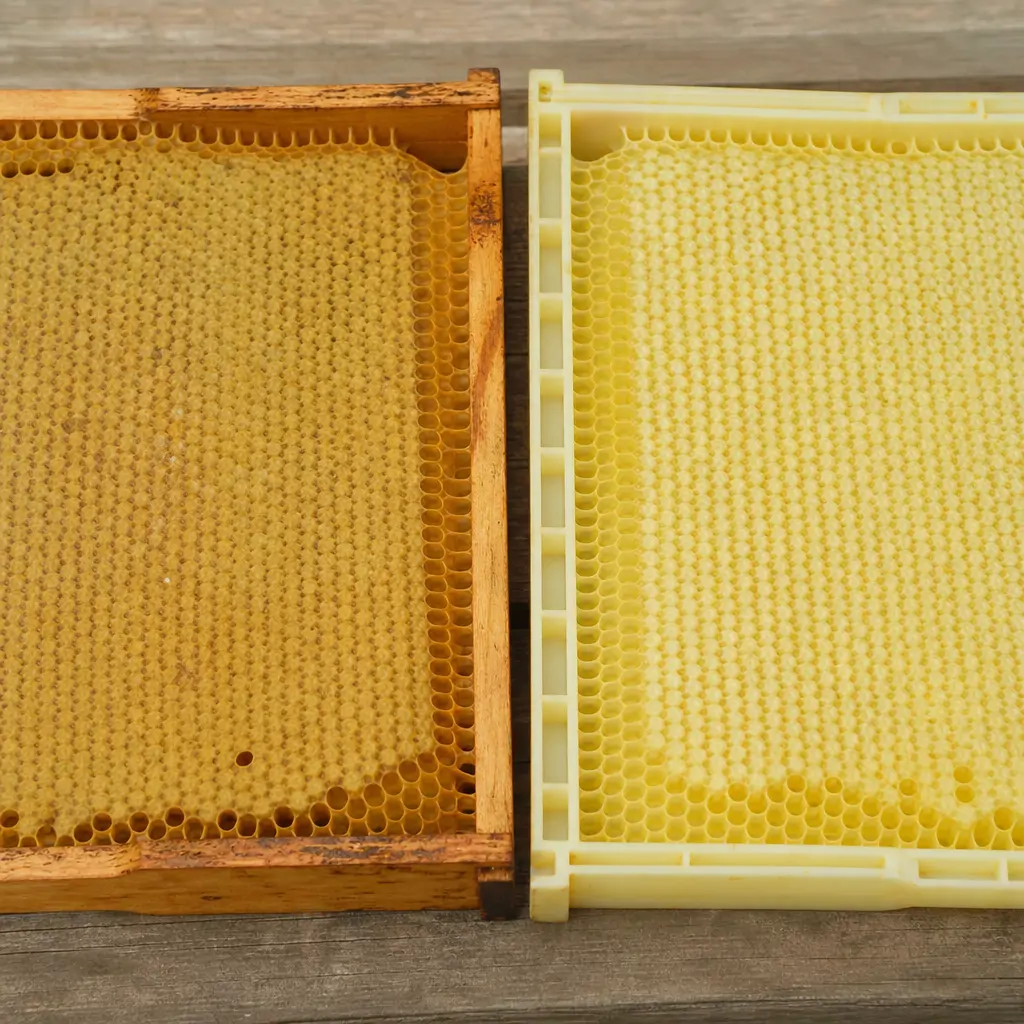
Hive bodies and frames can be built from wood or from various plastics, and the choice affects durability, cost, and how bees respond to the surface. This is a smaller decision compared to hive style, but it matters enough that many beekeepers revisit it after their first season. A closer look at beehive material wood vs plastic breaks down the practical differences without pushing a single answer.
Nucleus Hive vs Full Hive
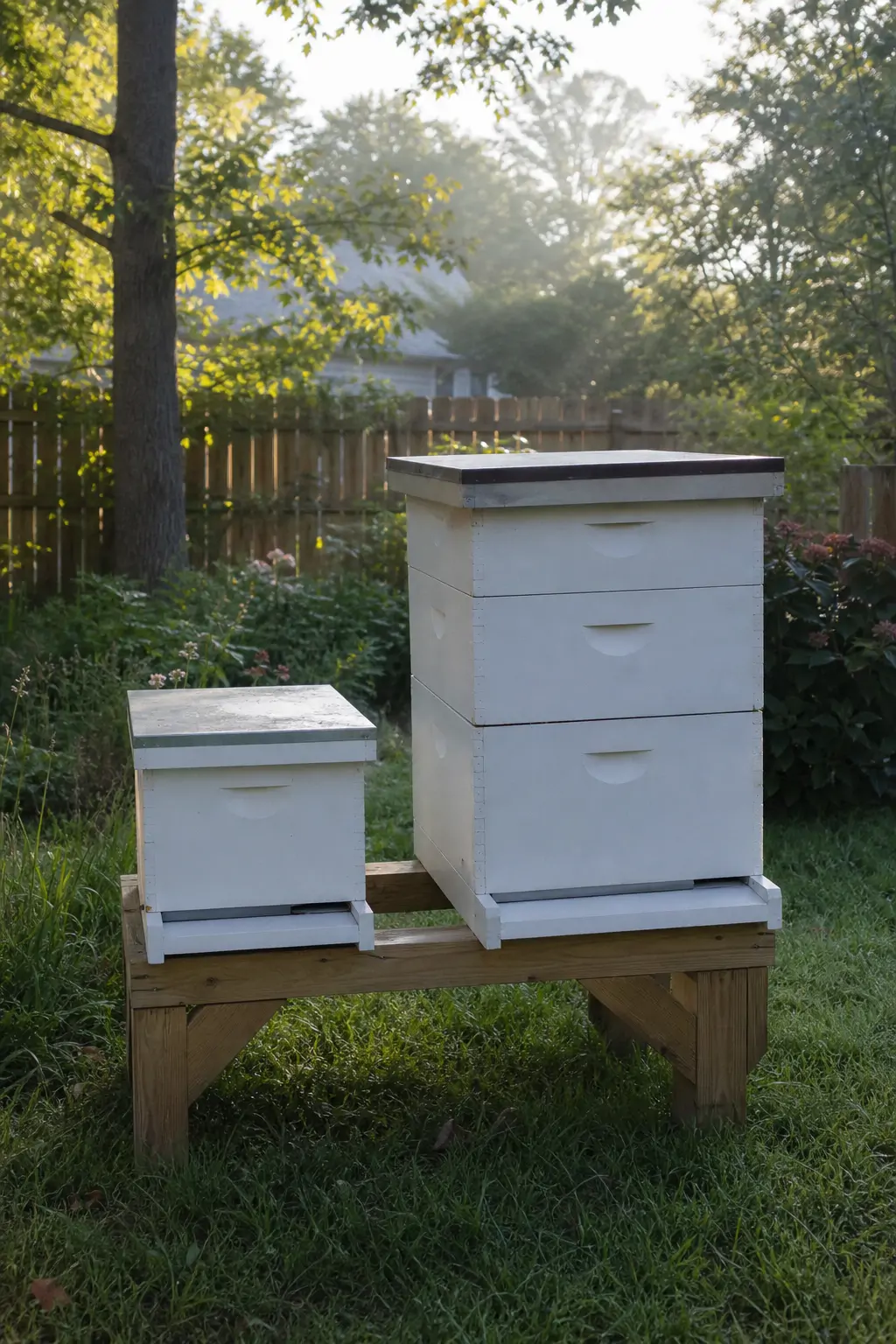
Before any hive style question, there's often a more immediate one: should a beginner start with a small nucleus colony or a full established hive? The nucleus, or nuc, is a smaller starter colony that grows into the chosen hive over time, while a full hive arrives already established. A nucleus hive vs full hive comparison is especially useful for readers still deciding how to source their very first bees.
Hive Stand Height and Placement
Regardless of which hive design is chosen, it needs to sit somewhere, and the height and placement of that stand affects everything from pest access to how comfortable inspections will be on the beekeeper's back. Readers researching hive stand height are usually at the setup stage, figuring out logistics before bees ever arrive.
Best Beehive Paint Colors
Exterior color isn't just cosmetic. It affects how much heat the hive absorbs and how visible the bees' entrance is against the surrounding yard. Content on best beehive paint colors covers which shades tend to work well in different climates and why some beekeepers avoid certain colors near the entrance.
Migratory vs Permanent Hives
Most backyard beekeepers keep their hives in one place, but some move colonies seasonally to follow blooms or rented pollination contracts. Understanding migratory vs permanent hives helps clarify why commercial operations look so different from a typical backyard setup, and whether any of those practices are worth borrowing on a smaller scale.
How the Cluster Fits Together
These sub-topics aren't isolated from one another; they overlap in practical ways. A reader comparing langstroth vs top bar hive options will often need to think about material and stand height at roughly the same time, since those decisions depend on which hive style was chosen first. Someone deciding between a nucleus hive vs full hive purchase is usually a step earlier in the process than someone debating paint colors, which tends to come after the physical hive is already assembled.
A sensible path through this cluster starts with the core hive-style decision, moves to setup and sourcing questions, and finishes with smaller finishing choices like material, color, and placement. Readers who already know their hive style can skip straight to setup content, while total beginners are usually better served starting with the style comparisons first.
Choosing the right hive isn't a single decision so much as a series of smaller ones that build on each other. Getting comfortable with the major types of beehives, and understanding how each sub-topic in this cluster answers a different part of that puzzle, makes the rest of the beekeeping journey considerably less confusing. From here, the sub-pillar articles linked throughout this page are the right next stop for whichever question is most pressing right now.