Varroa Mite Treatment: Methods That Actually Work
Varroa Mite Treatment: Methods That Actually Work
Varroa destructor is, by most accounts, the single biggest threat facing backyard honey bee colonies in the United States today. This parasitic mite doesn't just weaken individual bees by feeding on their fat body tissue; it also transmits a range of viruses that can quietly unravel a colony from the inside out. For hobby beekeepers, understanding varroa mite treatment isn't optional maintenance — it's the difference between a colony that survives winter and one that collapses without much warning.
This guide focuses specifically on what to do once varroa is suspected or confirmed in a hive. Rather than repeating basic background information, it walks through how to recognize a real infestation, compares the treatment methods available to backyard beekeepers, and covers timing decisions and mistakes that even experienced hobbyists make. Anyone managing a hive of their own — whether it's a single backyard colony or a handful of boxes in a shared bee yard — will find practical, decision-ready information here.
Because mite management intersects with several other aspects of colony health, including honey bee diseases and general hive resilience, treatment decisions rarely happen in isolation. A colony fighting varroa is often more vulnerable to other stressors at the same time, which is exactly why an informed, proactive approach matters so much.
Recognizing Varroa Mite Symptoms Before You Treat
Treating for varroa without confirming an actual mite load is a common misstep. Some beekeepers reach for chemical strips at the first sign of a struggling colony, when the real issue might be a failing queen or nosema disease in bees. Correctly identifying varroa mite symptoms first prevents wasted treatments and helps determine how aggressive the response needs to be.
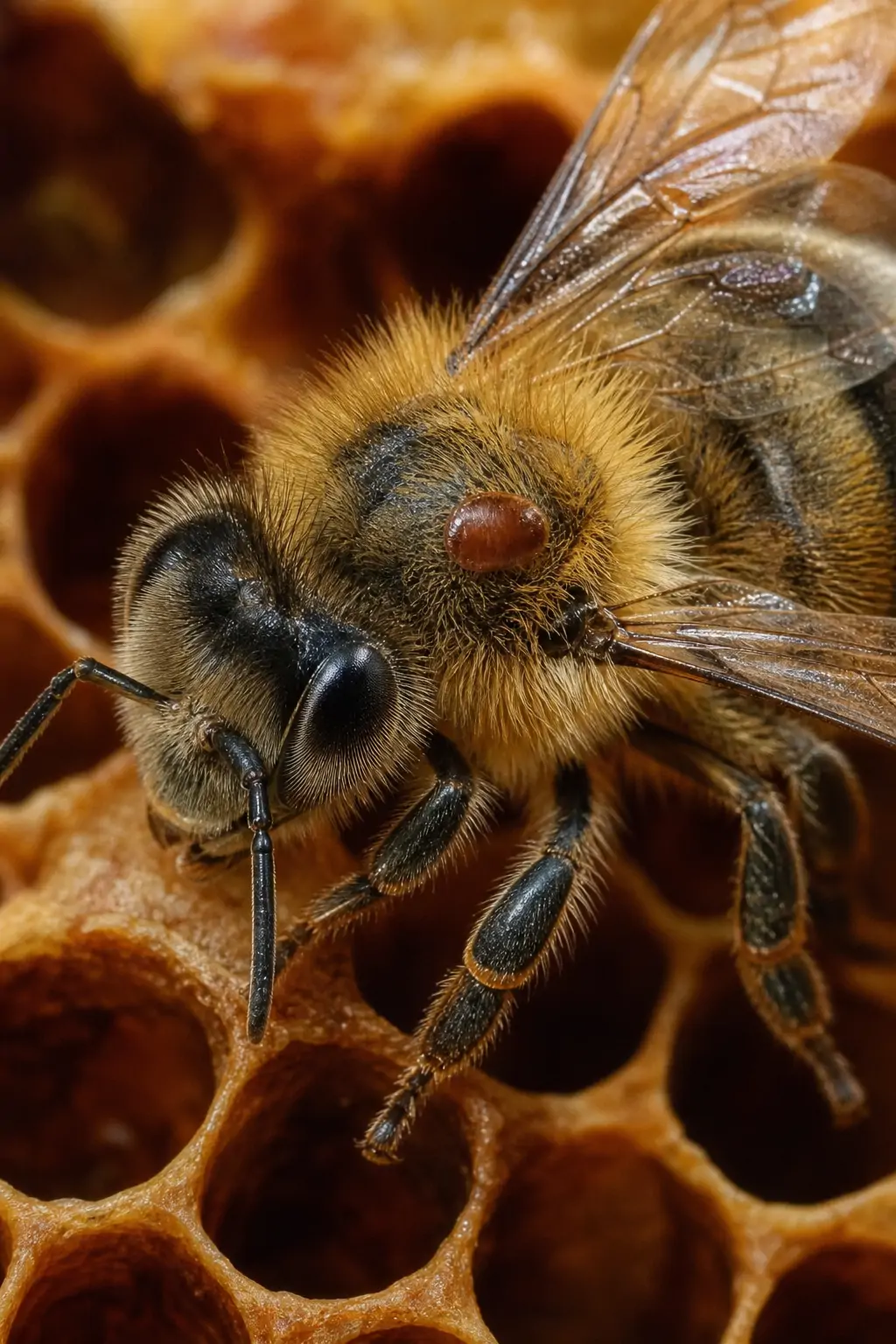
Visible mites on adult bees are the most obvious sign, but by the time mites are easily spotted on adult bees with the naked eye, the infestation is usually already severe. More subtle indicators tend to show up first: deformed wings on emerging bees (often called DWV symptoms, tied to deformed wing virus), a spotty or irregular brood pattern, and bees that appear to be crawling on the ground near the hive entrance instead of flying. A sudden, unexplained drop in colony population between late summer and early fall is another red flag worth investigating.
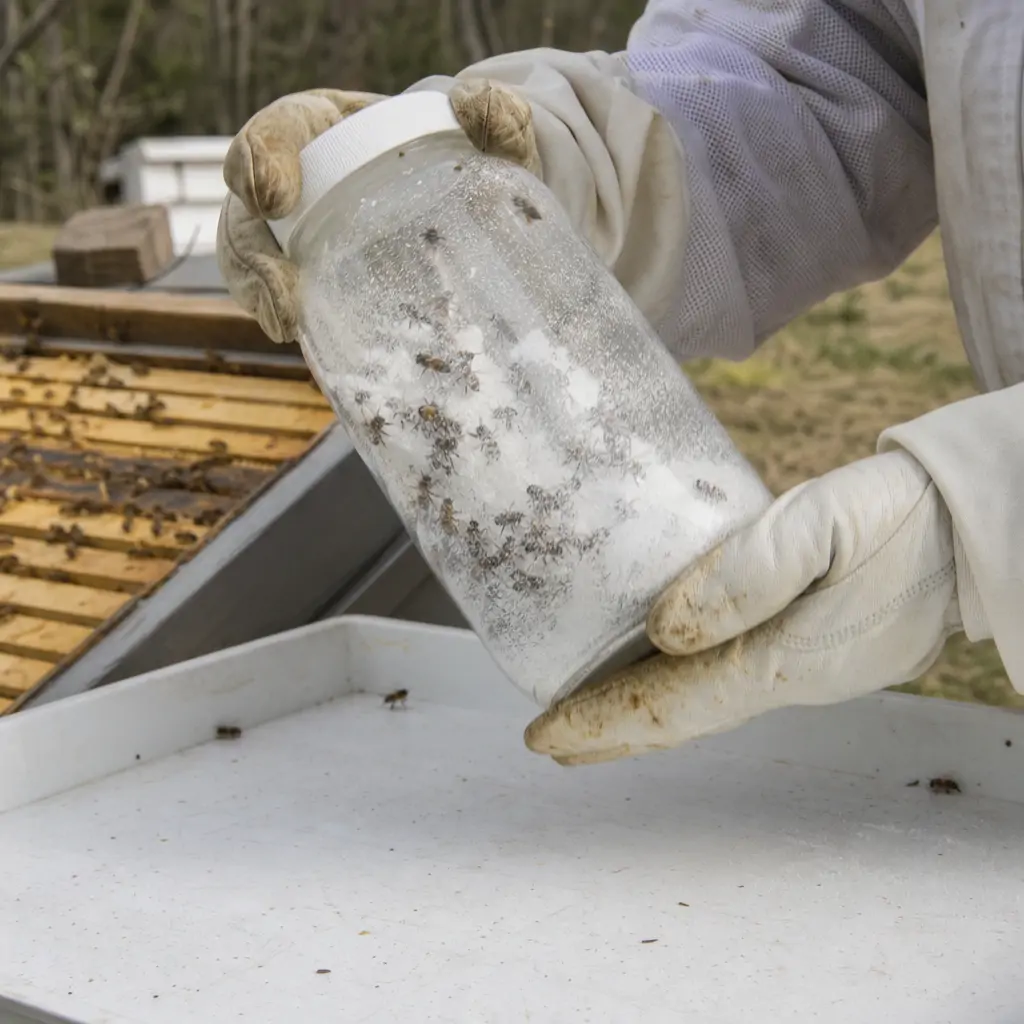
The most reliable way to catch mites early is through a physical mite count rather than visual inspection alone. A sugar roll test or alcohol wash, performed on a sample of around 300 bees, gives a percentage-based mite load that can be compared against established treatment thresholds. Generally, a mite count above 2-3% (roughly 6-9 mites per 300 bees) signals that treatment should begin soon, while counts above 5-6% indicate an urgent situation. Any of these symptoms may indicate a problem and should be evaluated by a qualified professional or experienced local mentor if there is uncertainty about interpreting the results.
Skipping the count step and treating based on guesswork is one of the most frequent errors backyard beekeepers make; it often leads to either unnecessary chemical exposure for the colony or, worse, a false sense of security when the real mite load is much higher than assumed.
Varroa Mite Control Methods: Comparing Your Options
Once an infestation is confirmed, the next question is which varroa mite control methods actually fit the situation. There is no single best treatment for every hive; the right choice depends on the season, outdoor temperature, whether honey supers are on the hive, and how severe the mite load has become. Below is a comparison of the main categories available to backyard beekeepers in the US.
| Method | Typical Effectiveness | Temperature Restrictions | Safe With Honey Supers |
|---|---|---|---|
| Synthetic miticide strips (e.g., amitraz-based) | High (often 90%+) | Moderate range, check label | No |
| Oxalic acid (vaporization or dribble) | Moderate to high, best when broodless | Above freezing, below 85°F for vapor | Generally yes when timed correctly |
| Formic acid pads | Moderate to high | 50–85°F range required | Yes, label dependent |
| Thymol-based treatments | Moderate | 60–100°F range | Varies by product |
| Drone brood removal / mechanical trapping | Low to moderate, supportive only | None | Yes |
| Screened bottom boards | Low, supplementary | None | Yes |
Synthetic Miticide Treatments
Products built around synthetic active ingredients remain some of the most consistently effective options for knocking down a heavy mite load quickly. Strips are applied inside the brood chamber and left in place for a set number of weeks, during which bees distribute the active ingredient through normal contact. The tradeoff is that these products generally cannot be used while honey intended for harvest is on the hive, and there's a long-running concern in the beekeeping community about mites developing resistance to certain synthetic compounds after repeated, exclusive use over many seasons.
Organic Acid Treatments
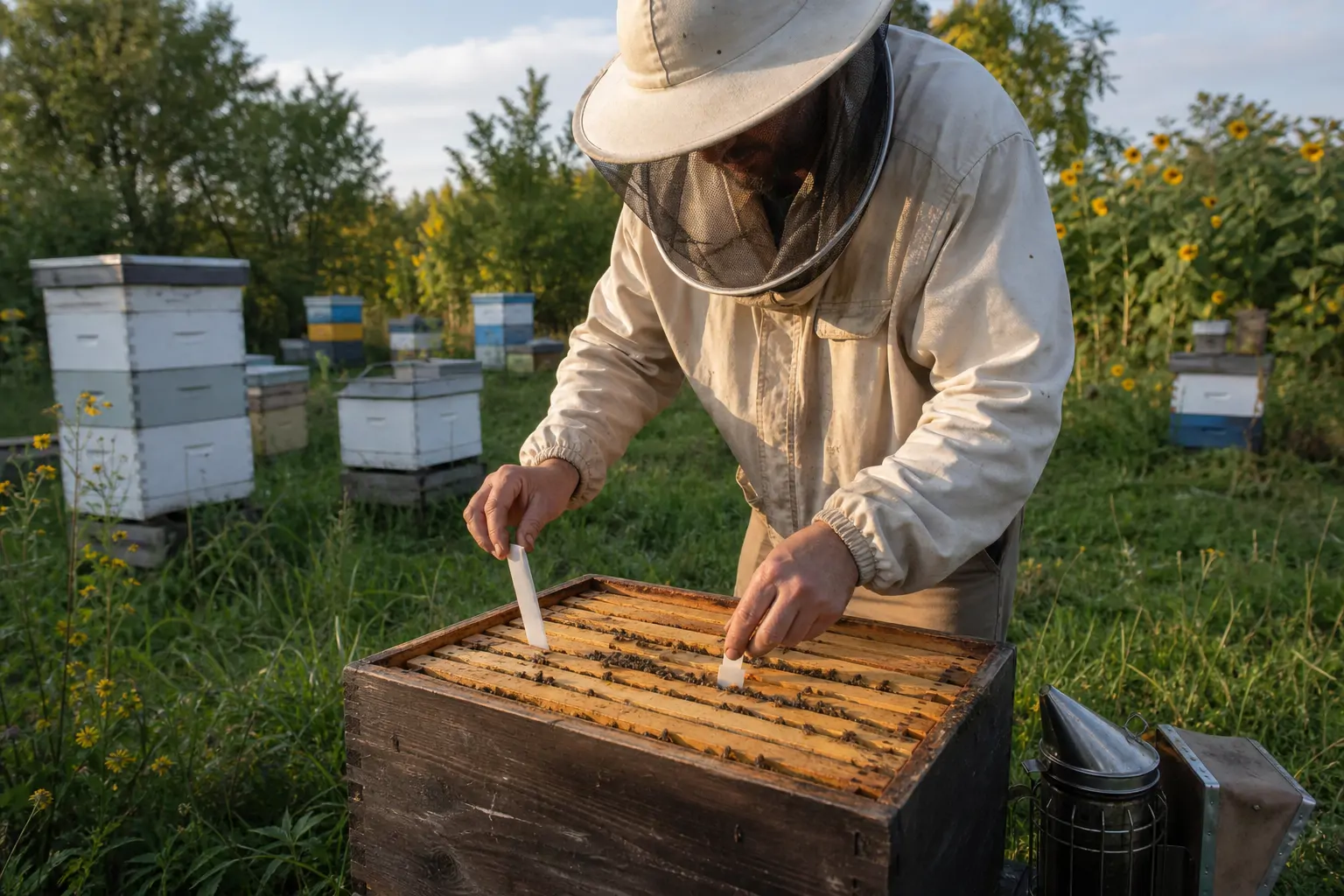
Oxalic acid and formic acid represent the organic acid category, and both have become staples of modern varroa mite treatment programs. Oxalic acid works especially well during broodless periods, such as early spring or after a swarm, because mites hiding under brood cappings are protected from most treatments — when there's little or no capped brood, mites are exposed on adult bees where the acid can reach them. Formic acid has an advantage in that it can penetrate capped brood cells to some degree, making it useful even when brood is present, but it requires fairly specific temperature conditions to work safely and effectively.
Mechanical and Cultural Controls
Non-chemical approaches rarely eliminate a heavy infestation on their own, but they play a real role in an integrated strategy. Removing drone brood, since mites preferentially reproduce in drone cells, can meaningfully reduce mite reproduction over a season when done consistently. Screened bottom boards allow some mites that fall off bees to drop out of the hive rather than climbing back on, though the reduction in mite numbers from this method alone is modest. These tools work best as a supplement to, not a replacement for, a chemical or acid-based treatment during periods of high mite pressure.
One takeaway worth remembering here: no single method solves varroa on its own for very long. Rotating between different classes of treatment across a season, rather than relying on one product exclusively, reduces the risk of resistance developing and generally produces more consistent long-term results.
Timing, Resistance, and Common Mistakes in Treatment
Knowing how to treat varroa mites correctly is as much about timing as it is about product selection. Treating too late in the season is one of the most damaging mistakes a backyard beekeeper can make, because bees raised in late summer and early fall are the ones that need to survive winter. A colony that goes into winterizing a beehive with a high mite load, even if it looks strong going into October, has a much higher chance of dying before spring — often without any obvious warning signs until it's too late to intervene.
Building a Treatment Schedule That Works
A workable annual plan typically includes a mite check and, if needed, treatment in early spring before major nectar flows begin; a mid-summer check after supers are pulled or before they go on; and a critical late-summer to early-fall treatment timed to protect the winter bee population. Some beekeepers add an oxalic acid treatment in late fall or early winter during a broodless period as a final cleanup measure before the cluster forms for winter.
Practical Considerations and Frequently Missed Details
Several details get overlooked even by beekeepers who are otherwise diligent about mite management. Reading product labels closely matters more than most people expect, since temperature windows, brood presence, and honey super restrictions vary meaningfully between products and even between formulations of the same active ingredient. Treating an already weak or queenless colony without first addressing the underlying issue is another common error; a colony dealing with queen bee problems or a recent robbing event needs stabilization alongside, not instead of, mite treatment. It's also worth noting that mites can drift between colonies through robbing behavior or bees drifting to neighboring hives, meaning an apiary with multiple colonies really needs a coordinated approach rather than treating just one struggling box in isolation. Ignoring nearby feral colonies or a neighbor's untreated hives, where mite populations can build unchecked and then spread, is an overlooked consideration that has undone many otherwise solid treatment plans.
The takeaway across all of this: effective varroa control isn't a single decision made once a year, it's an ongoing monitoring and response cycle built around counts, timing, and rotation rather than a single product applied on a fixed calendar date.
Managing varroa successfully comes down to combining accurate monitoring with a treatment approach suited to the season and the colony's actual condition, rather than reaching for the same product out of habit. Backyard beekeepers who check mite loads regularly, rotate treatment types, and time interventions around the colony's brood cycle tend to see far better overwintering outcomes than those who treat reactively. Staying attentive to these details, season after season, is what keeps a hobby apiary healthy for the long run.