Winterizing a Beehive: A Complete Seasonal Prep Guide
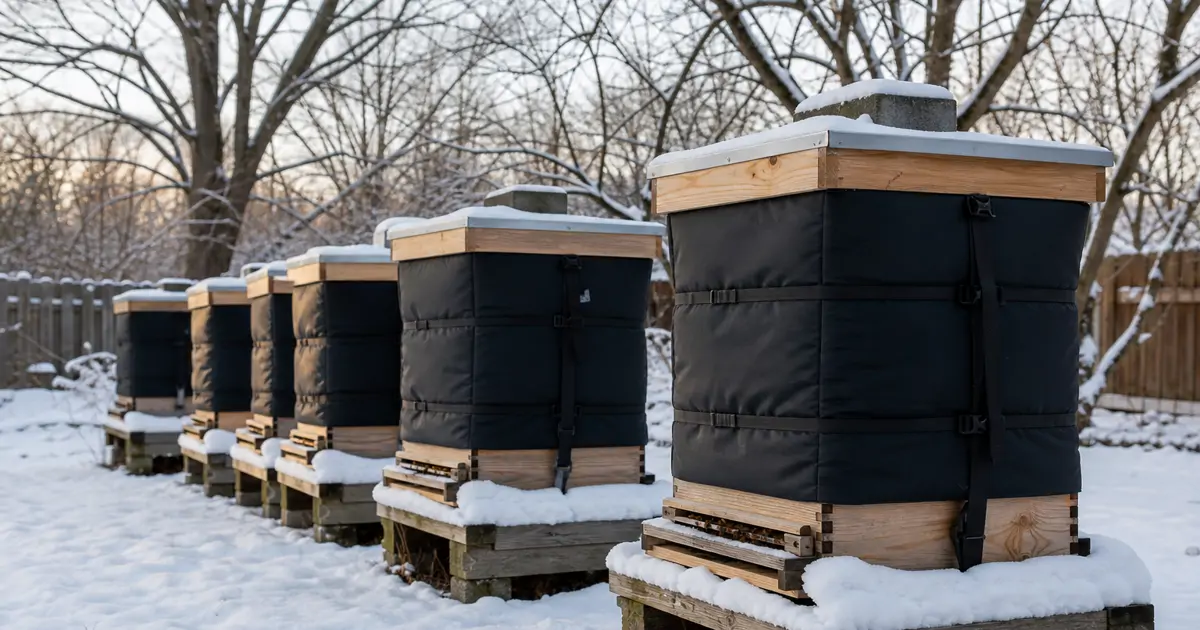
Winterizing a Beehive: A Complete Seasonal Prep Guide
Every fall, backyard beekeepers face the same quiet deadline: get the hive ready before the weather turns, or risk finding a dead colony in the spring. Winterizing a beehive is not a single afternoon chore. It is a sequence of decisions made over several weeks, each one affecting whether a colony has enough food, enough dry air, and enough population to survive months of confinement.
Colony losses over winter are among the most common frustrations reported by hobbyist beekeepers, and the causes are rarely mysterious once you look closely. Most failures trace back to a handful of preventable issues: insufficient stores, poor moisture control, mite loads left unchecked into fall, or a colony that simply wasn't strong enough going into the cold months. Understanding how to prepare beehive for winter properly means addressing all of these at once, not just one.
This guide walks through the reasoning behind each step of winter beehive care, what to watch for as temperatures drop, and where beekeepers most often go wrong. The goal is not just to list tasks, but to explain why each one matters so you can adapt the plan to your own climate and hive setup.
Why Winter Survival Comes Down to Moisture, Not Just Cold
It is a common assumption that cold temperatures alone kill honey bee colonies. In practice, bees are remarkably good at generating heat. Workers cluster tightly around the queen and vibrate their flight muscles to produce warmth, keeping the center of the cluster around 90 degrees Fahrenheit even when it is well below freezing outside. What actually kills colonies more often is moisture.
As the cluster generates heat and the bees respire, warm moist air rises and hits the cold underside of the inner cover or roof. That moisture condenses and drips back down onto the cluster. Bees can tolerate cold air far better than they can tolerate cold water landing directly on them, so a hive with poor ventilation can lose a colony to chilling even when outside temperatures aren't unusually severe. This is one of the most overlooked aspects of overwintering bees, and it explains why two hives in the same yard, exposed to identical weather, can have completely different outcomes.
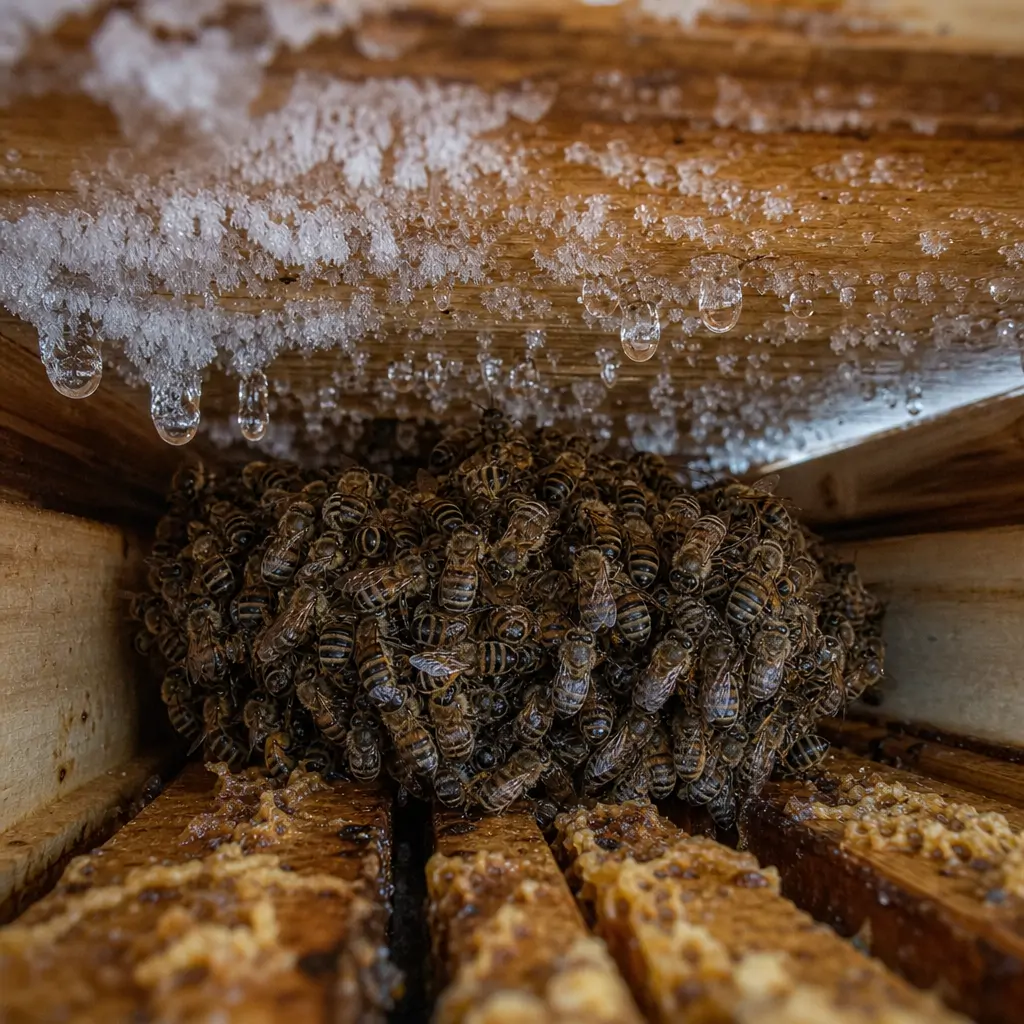
A secondary factor is starvation, which often gets misread as a mite or disease problem. A cluster that has consumed all the honey stores directly above it can starve to death within inches of full frames on either side, because bees are reluctant to break cluster and move sideways in extreme cold. Positioning of food stores matters just as much as the total quantity on hand.
Winter beehive care ultimately comes down to managing these two variables, moisture and food access, while keeping the colony population large enough to hold a stable cluster temperature. Everything in the sections below supports one of those three goals.
Takeaway: Cold rarely kills a colony outright; trapped moisture and misplaced food stores usually do the damage.
Step-by-Step: How to Prepare Beehive for Winter
Timing and sequence matter here. Some of these steps need to happen weeks before the first hard frost, while others are ongoing checks through the cold season. Treat this less like a checklist to complete once and more like a seasonal rhythm.
Evaluate Colony Strength and Food Reserves
Before doing anything else, assess whether the colony is actually strong enough to overwinter. A hive needs a large enough population to maintain cluster warmth through the coldest stretches, generally meaning enough bees to cover six or more frames going into late fall in most temperate US climates. Weak colonies are sometimes combined with a stronger hive using a simple newspaper method, which avoids fighting between the two populations while they merge.
Food stores should be checked by weight, not by appearance. A full deep frame of honey weighs roughly six to eight pounds, and most colonies in colder regions need somewhere between 60 and 90 pounds of stored honey to make it through winter without supplemental feeding. If reserves fall short, heavy syrup feeding in early fall, followed by fondant or a candy board once temperatures drop too low for syrup, gives the colony a better shot. This is also the point where it's worth checking for signs of a sick beehive, since a colony fighting disease or mites has a much harder time building the stores it needs.
Manage Ventilation to Prevent Condensation
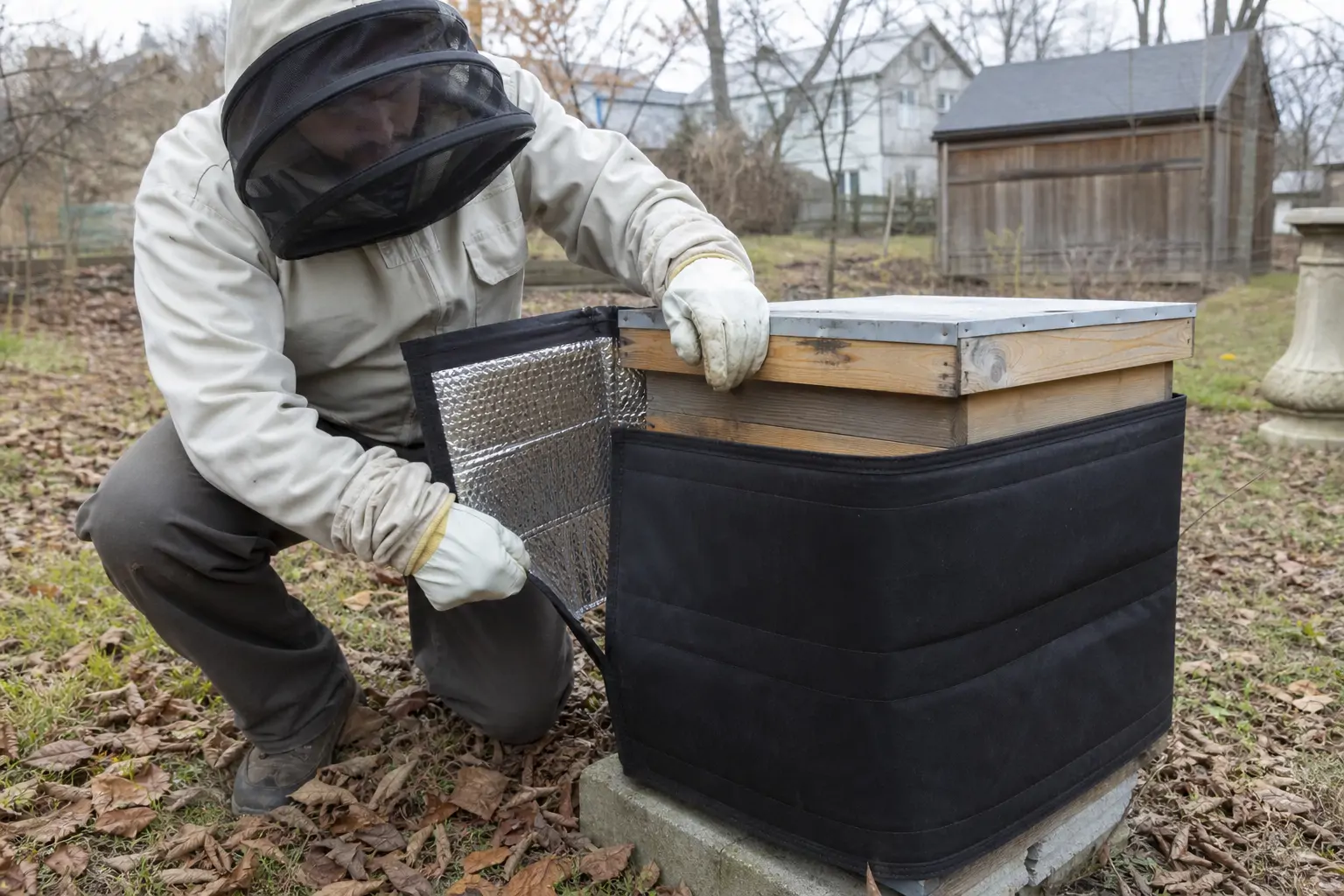
Given the moisture problem described earlier, ventilation deserves deliberate attention rather than an afterthought. A small upper entrance or ventilation notch lets warm moist air escape before it condenses, and a moisture quilt or absorbent board above the inner cover can pull excess humidity away from the cluster. Wrapping a hive in insulation without addressing airflow often makes condensation worse, not better, because it traps warm air against cold surfaces with nowhere to vent.
Reduce Entrances and Block Wind
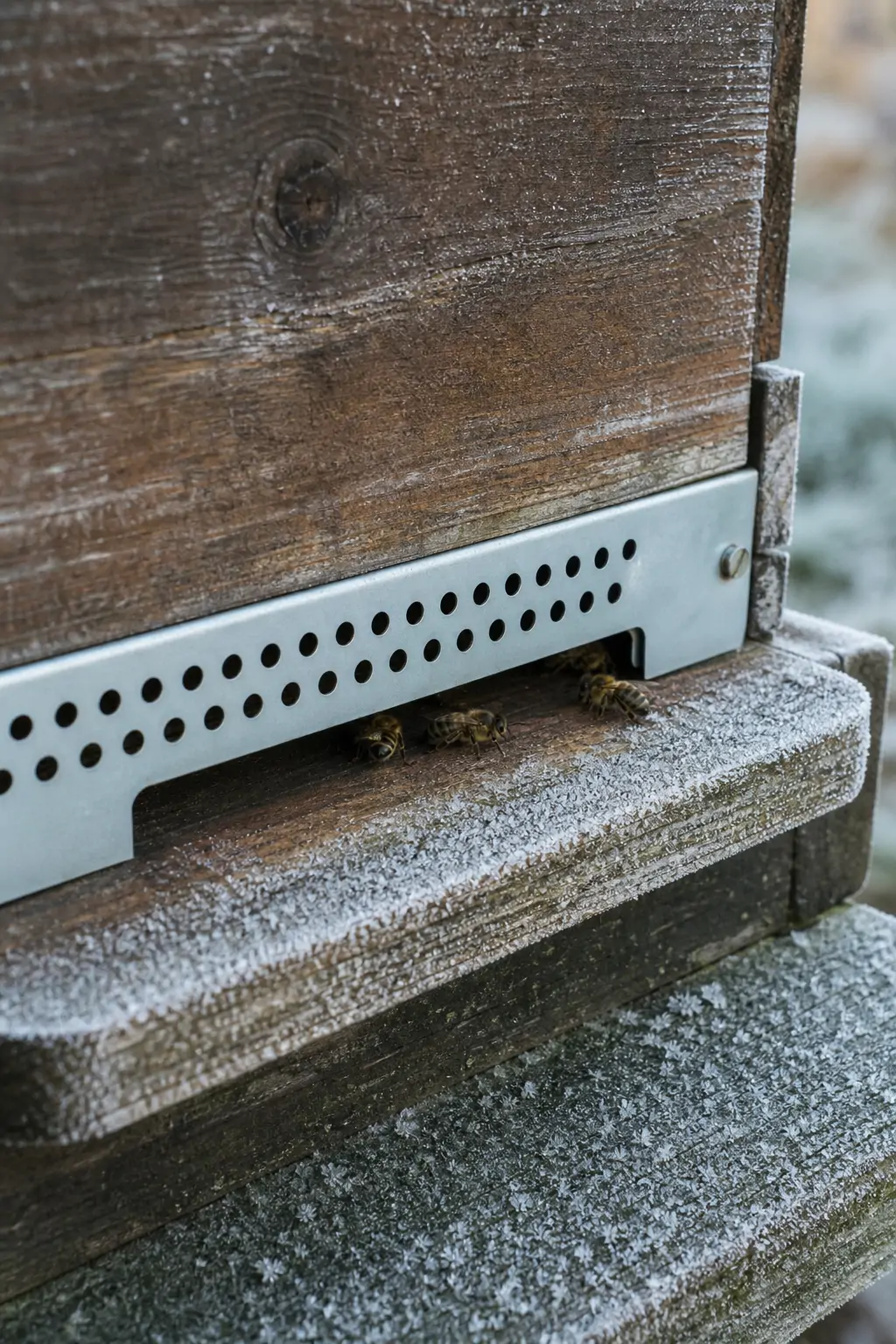
Installing an entrance reducer serves two purposes: it helps the colony defend a smaller opening against robbing and rodents, and it cuts down on drafts blowing directly into the brood area. Mice are a genuine winter threat, since a warm, food-stocked hive is an attractive shelter once temperatures drop, and a reduced entrance with a mouse guard keeps them out without blocking bee traffic on milder days. Wind breaks, whether a fence, hay bales, or simply positioning hives against a building, reduce heat loss on exposed sites more than most beekeepers expect.
Timing Your Prep Work Correctly
Most winterizing tasks should be finished before nighttime temperatures consistently drop into the 40s Fahrenheit, since colder weather makes it harder for bees to reorganize comb, accept syrup, or recover from an open hive inspection. Late fall mite treatments also need to happen early enough that the treatment has time to work before the bees producing the crucial winter generation are already raised, since bees that emerge weakened by mites in their final weeks rarely survive to spring. Anyone still working through varroa mite treatment options in early fall should aim to have the last round finished well before the first freeze.
Takeaway: Strength, stores, ventilation, and timing all interact, so weakness in one area often shows up as failure in another months later.
Common Mistakes in Winter Beehive Care
A recurring pattern among first-time beekeepers is sealing a hive too tightly in the name of warmth. Wrapping a hive in plastic or foam without any ventilation gap traps humidity inside, which circles back to the condensation problem discussed earlier. The intent is good, but the execution often backfires.
Another frequent misstep is opening the hive too often during cold weather to check on the colony. Every inspection breaks the propolis seal and releases the warm air the cluster has worked hard to generate, forcing bees to spend stored energy recovering that heat. In practice, checking hive weight by hand-lifting the back of the hive, or briefly listening for a soft hum, tells you most of what you need to know without a full inspection.
Beekeepers also sometimes misjudge the difference between a colony that is simply clustered tightly in cold weather and one that has gone silent because it has died or become queenless. Queenless hive symptoms can look deceptively similar to normal winter dormancy from the outside, which is why a light touch check, rather than a full teardown, is usually the safer diagnostic approach during the coldest months. If a colony seems unusually quiet, lighter than expected, or shows any of the signs of a sick beehive going into winter, that situation should be evaluated by a qualified professional or an experienced local beekeeper before assuming the worst.
Fall is also prime time for hive robbing, as colonies compete for the last available forage and dwindling stores make weaker hives an easy target. Robber bees prevention measures, like reduced entrances and avoiding open feeding, are worth reinforcing right alongside winter prep rather than treating them as a separate task.
Takeaway: Most winter losses trace back to over-sealing, over-inspecting, or misreading normal winter behavior as a crisis when it isn't.
Preparing a colony for the cold months is less about any single dramatic action and more about a series of small, well-timed decisions made through the fall. A colony with adequate stores, good ventilation, a manageable entrance, and a healthy population going into the cluster season has a real chance of coming through winter intact.
None of these steps guarantee survival on their own, since weather extremes and unexpected disease pressure can still take a toll even on well-prepared hives. But consistent, thoughtful winter beehive care remains the single biggest factor a backyard beekeeper actually controls, and it's worth treating that way.