How Many Hives Should a Beginner Start With
How Many Hives Should a Beginner Start With
One of the first practical decisions a new beekeeper faces isn't which hive design to buy or where to place it in the yard — it's how many colonies to start with. This sounds like a small logistical detail, but it actually shapes almost everything else about the first year: cost, time commitment, learning curve, and even the odds that a beginner sticks with the hobby at all.
Most people assume the safest, cheapest way to begin is with a single hive. That instinct makes sense on paper. Less money, less equipment, less to manage. But among experienced mentors and long-running beekeeping associations, the advice is often the opposite. A surprising number of seasoned keepers recommend starting with two colonies rather than one, and the reasoning behind that recommendation rarely gets explained in beginner guides.
This article breaks down the real tradeoffs involved in choosing a starting number of hives, compares one hive vs two hives directly, and looks at what starting with multiple beehives actually demands in terms of time, space, and skill. By the end, the goal isn't to hand you a rigid rule, but to help you make a decision that fits your budget, your yard, and your tolerance for risk.
The Case for Starting With Two Hives Instead of One
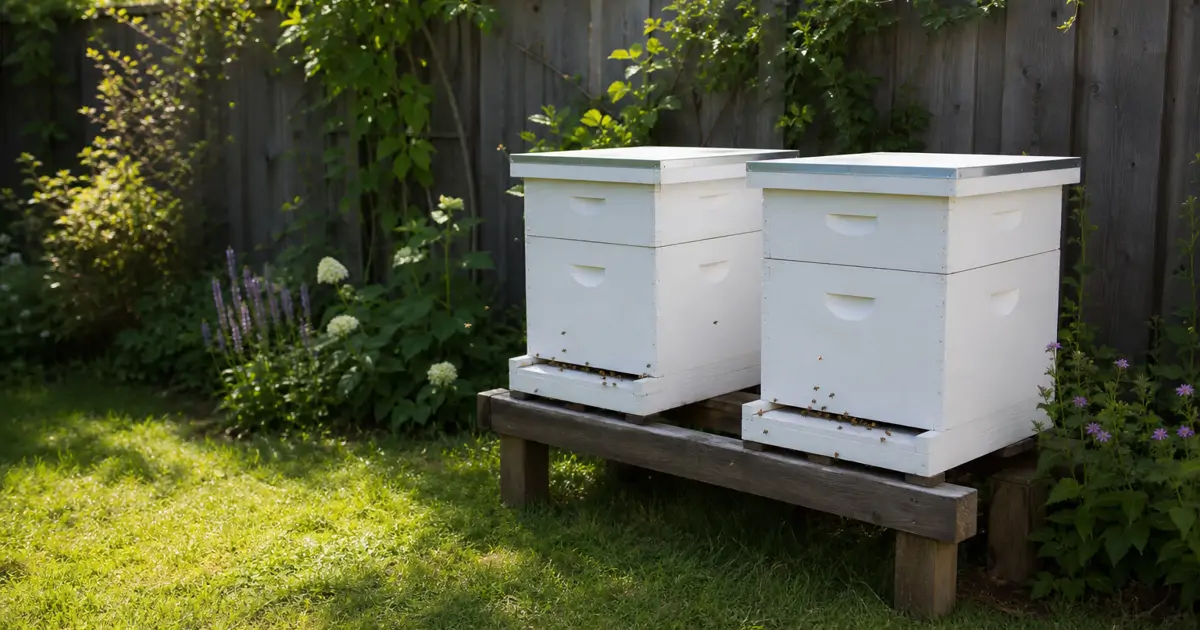
The single biggest argument for starting with two hives has nothing to do with honey production. It's about comparison. A beginner with only one hive has no baseline. If the bees are calm, that seems normal. If they're aggressive, that seems normal too. If brood pattern looks spotty, there's no second colony to check it against. Every observation exists in isolation, which makes it very difficult to tell whether something is a genuine problem or just normal variation.
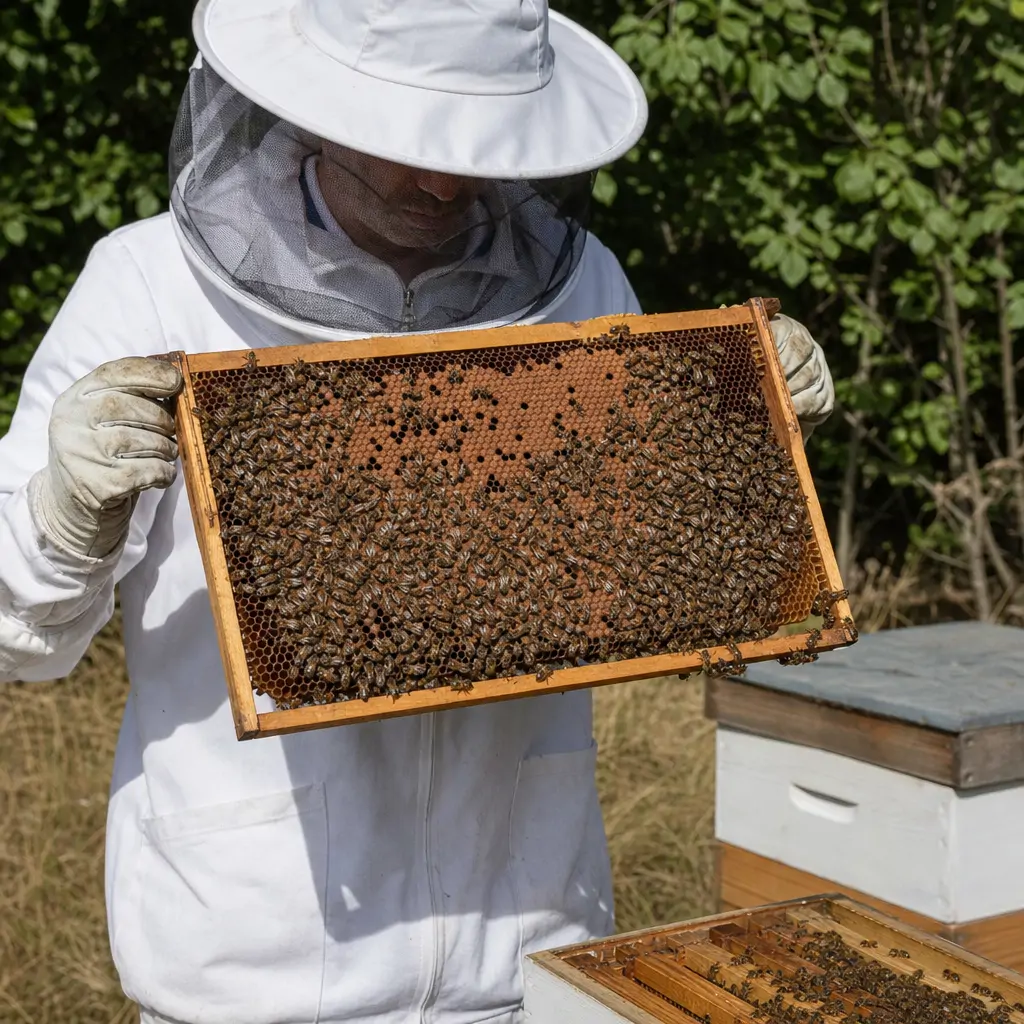
With two hives side by side, patterns become visible almost immediately. If one colony is bringing in pollen steadily and the other isn't, that's a signal worth investigating. If one queen is laying a tight, consistent brood pattern and the other is spotty and inconsistent, a beginner suddenly has something concrete to compare rather than guessing in the dark. This kind of side-by-side reference is one of the fastest ways new keepers build real judgment, and it's difficult to replicate with a single colony.
There's also a resource-sharing advantage that matters more than most new beekeepers expect. A weak or queenless colony can sometimes be helped by donating a frame of eggs or brood from a stronger neighboring hive, allowing the weak colony to raise a replacement queen. With only one hive, that option simply doesn't exist. A queen failure in a single-hive setup often means the colony is lost entirely, or the beekeeper has to source a replacement queen quickly, which isn't always straightforward, especially outside of spring.
Why Comparison Matters More Than You Think
New beekeepers frequently misread hive behavior because they have nothing to measure it against. A colony that seems slow to build up in April might just be a late starter, or it might be dealing with queen problems that need attention. Without a second hive nearby, it's easy to let a struggling colony limp along for weeks before recognizing the pattern, and by then the window to correct course has often narrowed considerably.
This is one of the most overlooked considerations in typical getting-started advice: the value of comparison isn't about having backup bees, it's about training your own eye faster. Beekeepers who start with two colonies tend to reach confident, independent decision-making sooner than those who start with one, simply because they're forced to notice differences rather than accept everything at face value.
One Hive vs Two Hives: Side-by-Side Comparison
Laid out directly, the practical differences between one hive vs two hives look like this. Neither option is universally correct — the right choice depends on budget, available space, and how much time a person can realistically commit during the first season.
| Factor | One Hive | Two Hives |
|---|---|---|
| Startup cost | Lower upfront investment | Roughly double the equipment and bee cost |
| Learning curve | Slower pattern recognition | Faster, due to direct comparison |
| Risk of total loss | Higher — one problem can end the hobby for the year | Lower — resources can be shared between colonies |
| Time per inspection | Shorter overall visits | Roughly 15-20 minutes more per visit |
| Space requirement | Minimal, fits small yards | Still manageable in most backyards with planning |
| Queen problem recovery | Limited options, often requires buying a new queen | Can requeen using resources from the second colony |
Cost, Time, and Space Considerations
Cost is usually the first objection to starting with two hives, and it's a fair one. Doubling up on woodenware, protective gear considerations, and package or nuc purchases roughly doubles the initial outlay. For someone still deciding whether beekeeping is a hobby they'll stick with, that jump in cost of beekeeping can feel like a lot to commit before the first season even proves itself out.
Time is the second consideration, and it's often underestimated. Two hives don't simply double inspection time — they add a bit more on top, since a beginner will naturally spend time comparing what they see between the two rather than just checking each one independently. In practice, this often adds an extra 15 to 20 minutes per visit, which matters for anyone trying to fit beekeeping around a full-time job.
Space is rarely the limiting factor people assume it will be. Two hives placed a few feet apart, angled slightly differently to reduce drifting between colonies, fit comfortably in most suburban backyards. The real constraint is almost always cost and time, not physical room.
What Starting With Multiple Beehives Really Involves
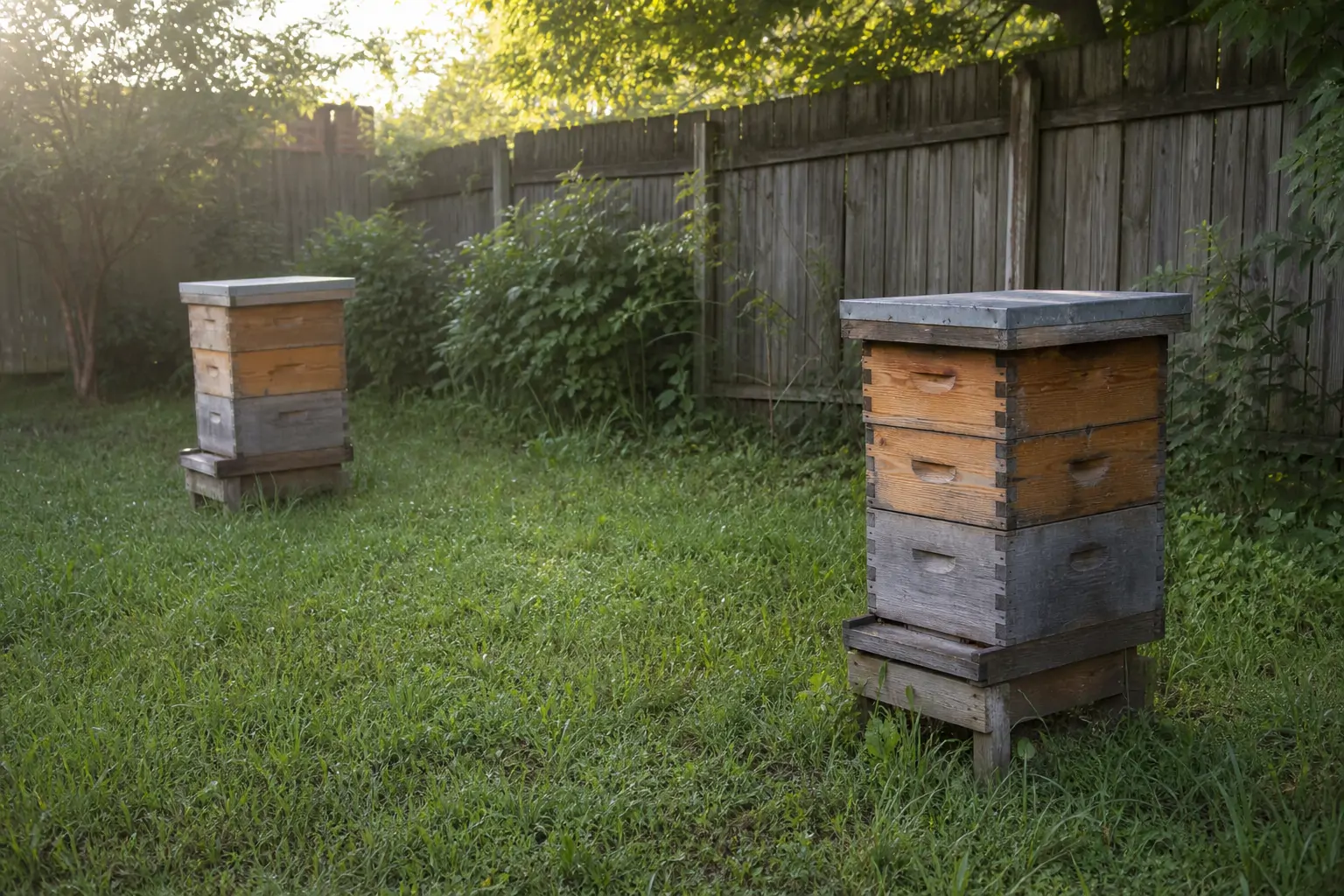
Starting with multiple beehives — meaning three or more — is a different conversation from the one-versus-two debate, and it's worth separating the two. Once a beginner moves past two colonies, the dynamics change. Inspections take noticeably longer, equipment storage becomes a real logistical question, and the beekeeper needs a plan for managing swarms, splits, and honey harvests across several colonies at once rather than just one comparison pair.
Many first-year keepers who jump straight to three or four hives do so because a local seller offers a discount on package bees purchased in bulk, or because a mentor is handing off extra equipment. That can work out fine, but it also multiplies the consequences of any mistake made during the learning year. A mismanaged inspection technique, for instance, gets repeated across more colonies rather than isolated to one.
Common Mistakes Beginners Make With Hive Numbers
One frequent misstep is starting with a single hive purely to save money, without a backup plan for what happens if that colony fails. Colony losses during the first winter are common even among experienced keepers, and a beginner with only one hive who loses it has nothing left to build from the following spring — often meaning a full restart, including sourcing new bees.
Another common mistake is the opposite extreme: starting with four or five hives out of enthusiasm, then becoming overwhelmed by the inspection schedule during peak season. Enthusiasm is a good sign, but it doesn't scale time. A person with a demanding job and only weekend availability may find that three hives already stretches their schedule thin during swarm season, when timely intervention matters most.
A third, more subtle mistake is treating hive count as a fixed decision made once and never revisited. In reality, most keepers adjust their hive number every year based on how the previous season went — splitting a strong colony into two, combining a weak one into a stronger neighbor, or simply deciding one was plenty after all.
When Three or More Hives Makes Sense
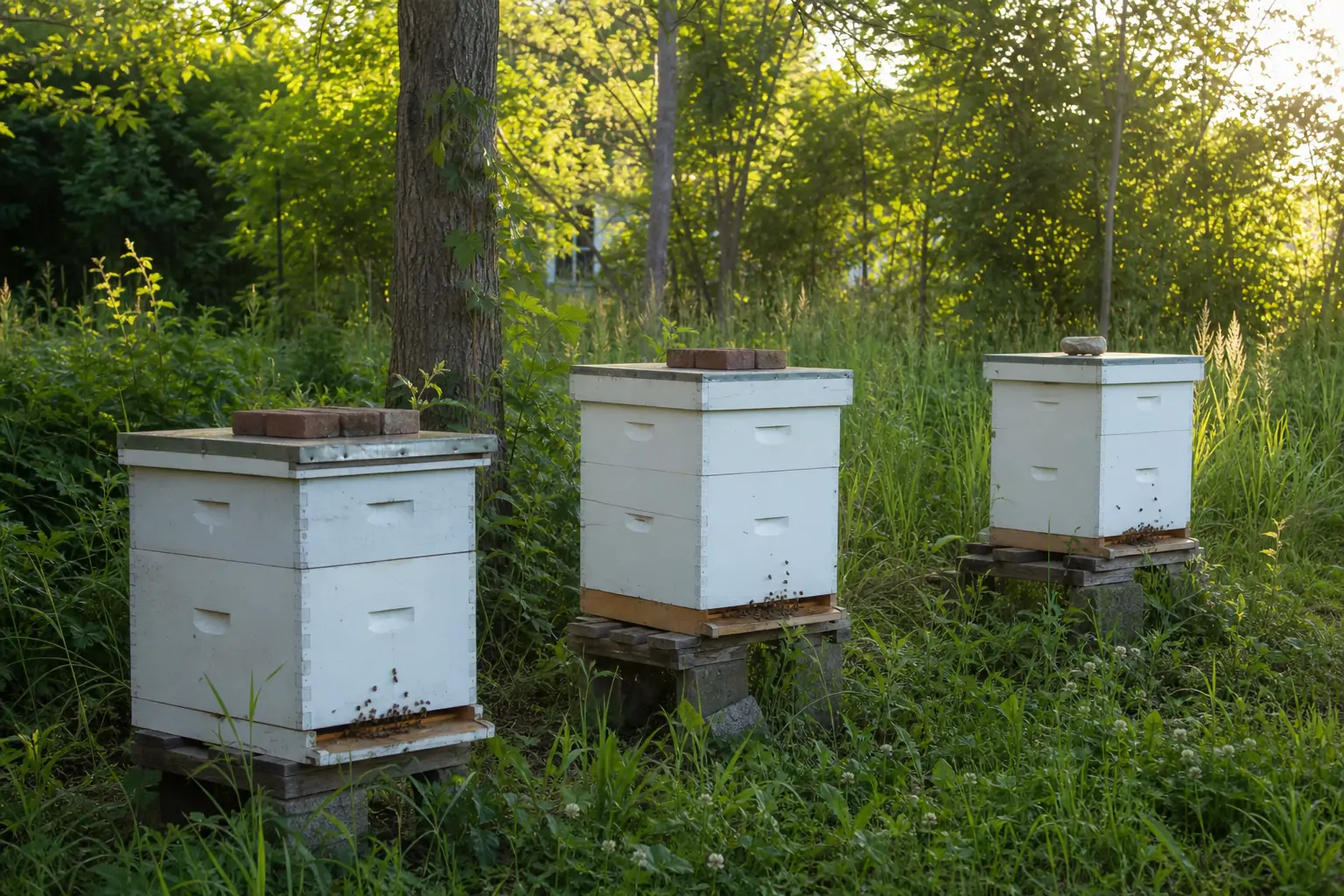
Three or more colonies generally make sense once a beekeeper has completed at least one full season and has a working rhythm for inspections, feeding schedules, and mite monitoring. At that point, additional hives mostly add scale rather than new categories of decision-making, since the beekeeper already recognizes normal versus abnormal colony behavior.
It also makes sense earlier than that for people with a specific goal in mind, such as producing enough honey to share regularly or planning to split colonies for sale. In those cases, starting with three hives from the outset can be reasonable, provided the time commitment has been honestly assessed beforehand rather than assumed.
Bringing It Together
There's no single correct answer to how many hives should a beginner start with, but the tradeoffs are clear enough to make an informed choice. One hive costs less and demands less time, but leaves a beginner without a comparison point and with little safety net if something goes wrong. Two hives cost more and take longer to inspect, but they teach faster, offer a built-in backup, and tend to produce more confident beekeepers by the end of the first season. Anything beyond two shifts the conversation from comparison toward scale, and should generally wait until a beginner has at least one full season of hands-on pattern recognition behind them.
Whichever number feels right, the decision is rarely permanent. Hive counts shift naturally as colonies grow, split, or occasionally fail, and most keepers find their rhythm changes year to year rather than staying fixed from day one.