American Foulbrood Symptoms Every Beekeeper Should Know
American Foulbrood Symptoms Every Beekeeper Should Know
Few words strike more fear into a beekeeper than American foulbrood. It is not a minor annoyance like a few wax moths in the corner of a hive box or a queen that has slowed her laying. American foulbrood is a bacterial disease that kills developing bee larvae and, left unchecked, can wipe out an entire colony while spreading spores to every hive within reach. Because the bacteria form spores that survive for decades in wax, wood, and honey, catching the disease early is not just about saving one hive. It is about protecting every apiary in the area.
This matters most for backyard beekeepers who may only inspect their colonies every week or two and who often manage just one or two hives. A missed diagnosis has consequences that ripple outward, since infected equipment, robbed honey, and even shared tools can carry spores to neighboring beekeepers. Recognizing early signs of a sick beehive versus a genuine foulbrood outbreak is one of the harder skills a new beekeeper has to develop, and this article walks through the specific signs that separate American foulbrood from more common, less dangerous brood problems.
Readers will come away knowing exactly what to look for in the brood nest, which field tests are reliable, and when it makes sense to stop guessing and call in a state or county apiary inspector.
Recognizing American Foulbrood Symptoms in the Hive
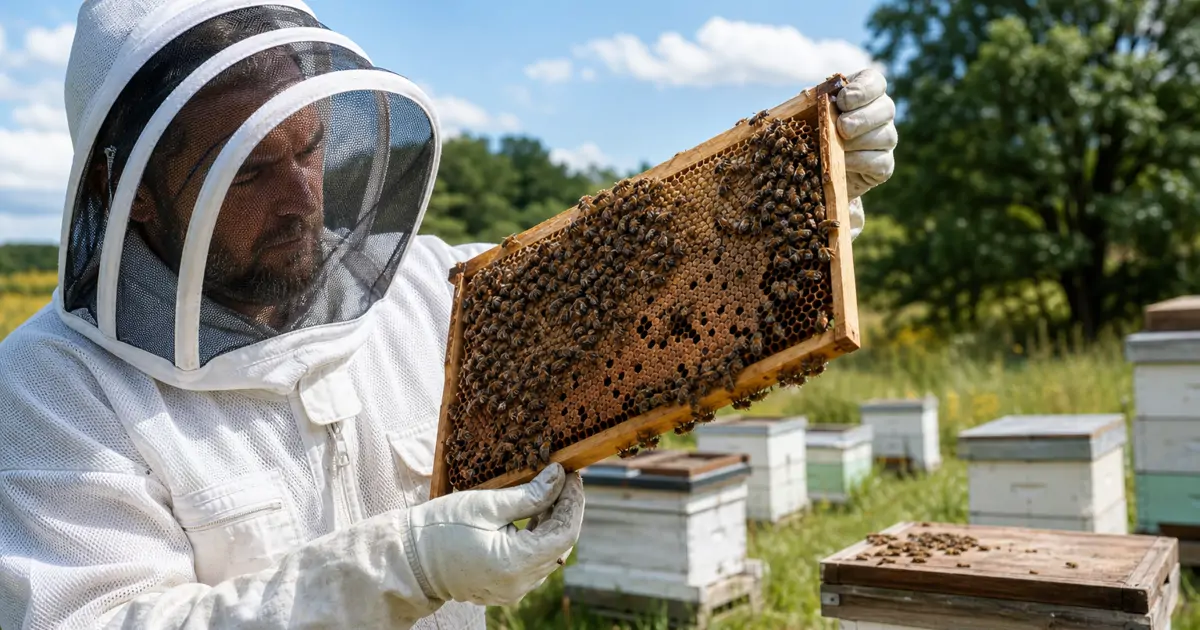
American foulbrood symptoms usually show up first in the brood pattern, not in the adult bees. A healthy frame of brood looks fairly uniform, with capped cells clustered tightly together and very few gaps. When foulbrood in bees takes hold, that pattern turns patchy and irregular, with scattered empty cells sitting right next to capped ones. This spotty appearance alone is not proof of disease, since a weak or failing queen can also cause gaps, but it is the first clue that should prompt a closer look and one of the more common unhealthy beehive symptoms worth learning to recognize.
The cappings themselves tell a more specific story. Instead of the slightly convex, uniformly tan cappings seen over healthy pupae, foulbrood-affected cells often appear darker, sunken inward, and sometimes perforated with small irregular holes. Bees frequently chew these caps open in an attempt to remove the dead larva inside, which is part of what gives infected frames their ragged, moth-eaten look. A sharp, unpleasant odor sometimes accompanies advanced infections, though relying on smell alone is unreliable since healthy hives can also carry strong scents from propolis or fermenting nectar.
The Ropy Test and Other Field Checks
The most dependable field diagnostic remains the ropy test, sometimes called the toothpick test. A thin stick or matchstick inserted into a suspect cell and slowly withdrawn will pull a stringy, mucus-like thread from a foulbrood-infected larva, often stretching an inch or more before breaking. Healthy larvae, or those affected by other brood diseases, do not produce this ropiness. It is a simple test that takes seconds and requires no equipment beyond a toothpick, yet many beekeepers skip it because the visual signs alone seem convincing enough. That is a mistake, since several other brood problems can mimic the early visual symptoms without producing a rope.
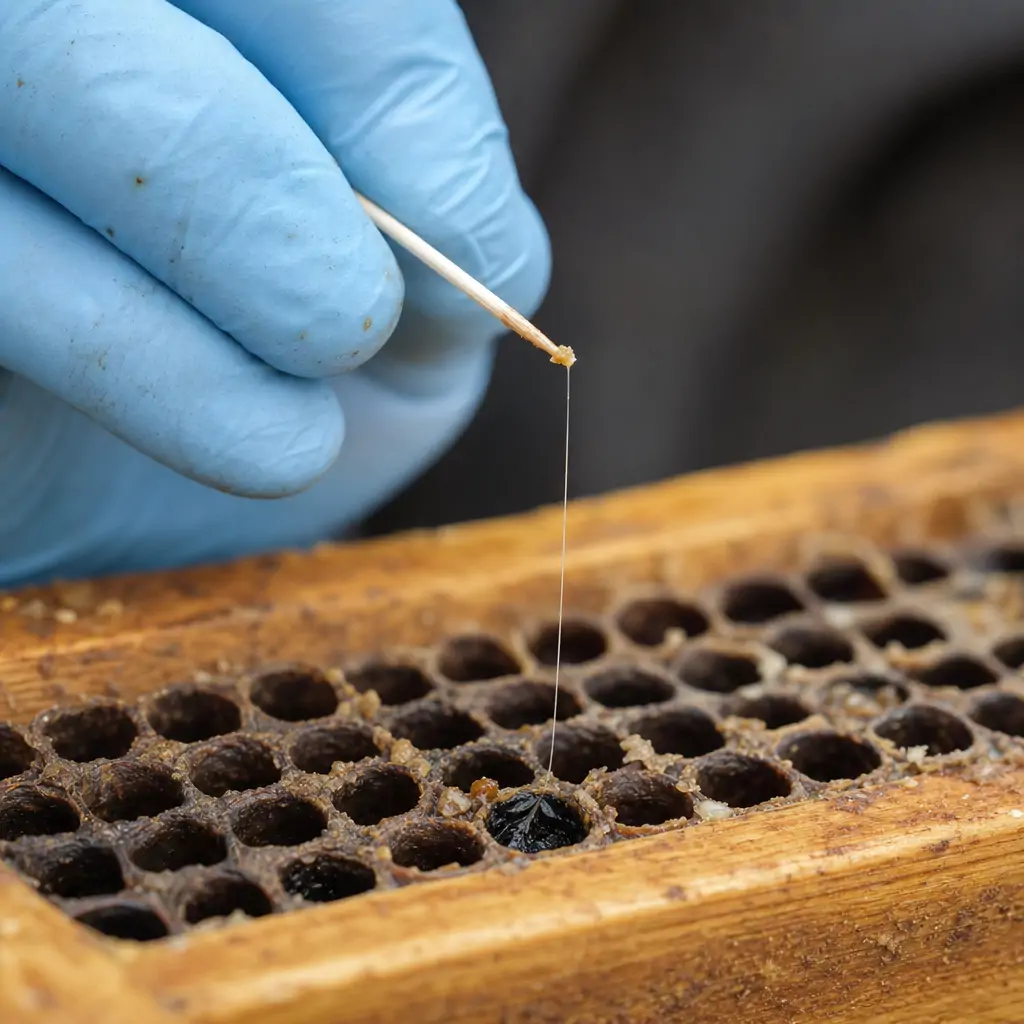
Once a larva has died and dried out completely, it leaves behind a hard, dark scale stuck firmly to the lower side wall of the cell. This scale is one of the most reliable long-term signs of past or ongoing infection, because unlike the ropy stage, it persists indefinitely and can be found even in old, previously infected equipment. A headlamp and a bit of patience go a long way here, since these scales are easy to miss on a quick glance and often hide in cells that have already been partially cleaned by house bees.
Sunken and Perforated Cappings
It is worth spending extra time specifically on the cappings, since this is where many beginner beekeepers first notice something is wrong without knowing what they are seeing. Sunken cappings alone can appear in several situations, including chalkbrood or simple starvation stress, so the key distinguishing detail is the combination of sinking, discoloration, and perforation happening together on multiple cells across a frame, not just one isolated cell. A single odd cell is rarely cause for alarm. A cluster of them, especially paired with a spotty brood pattern, is a signal worth investigating further with the ropy test, and it is a good example of how to tell if a hive is unhealthy before the problem becomes obvious to the naked eye.
Takeaway: a spotty brood pattern combined with sunken, perforated cappings and a positive ropy test is the strongest field evidence of American foulbrood, and no single sign should be treated as conclusive on its own.
What Causes American Foulbrood and Why It Spreads So Easily
The disease is caused by a spore-forming bacterium, and those spores are extraordinarily tough. They survive high temperatures, years of storage, and exposure to sunlight, which is precisely why contaminated equipment remains dangerous long after a colony has died out. A common misunderstanding among backyard beekeepers is thinking that leaving empty, infected boxes in storage for a season will let the problem fade away. It will not. Spores in old comb and hive walls can remain viable for decades, ready to infect a new colony the moment it is introduced to that equipment.
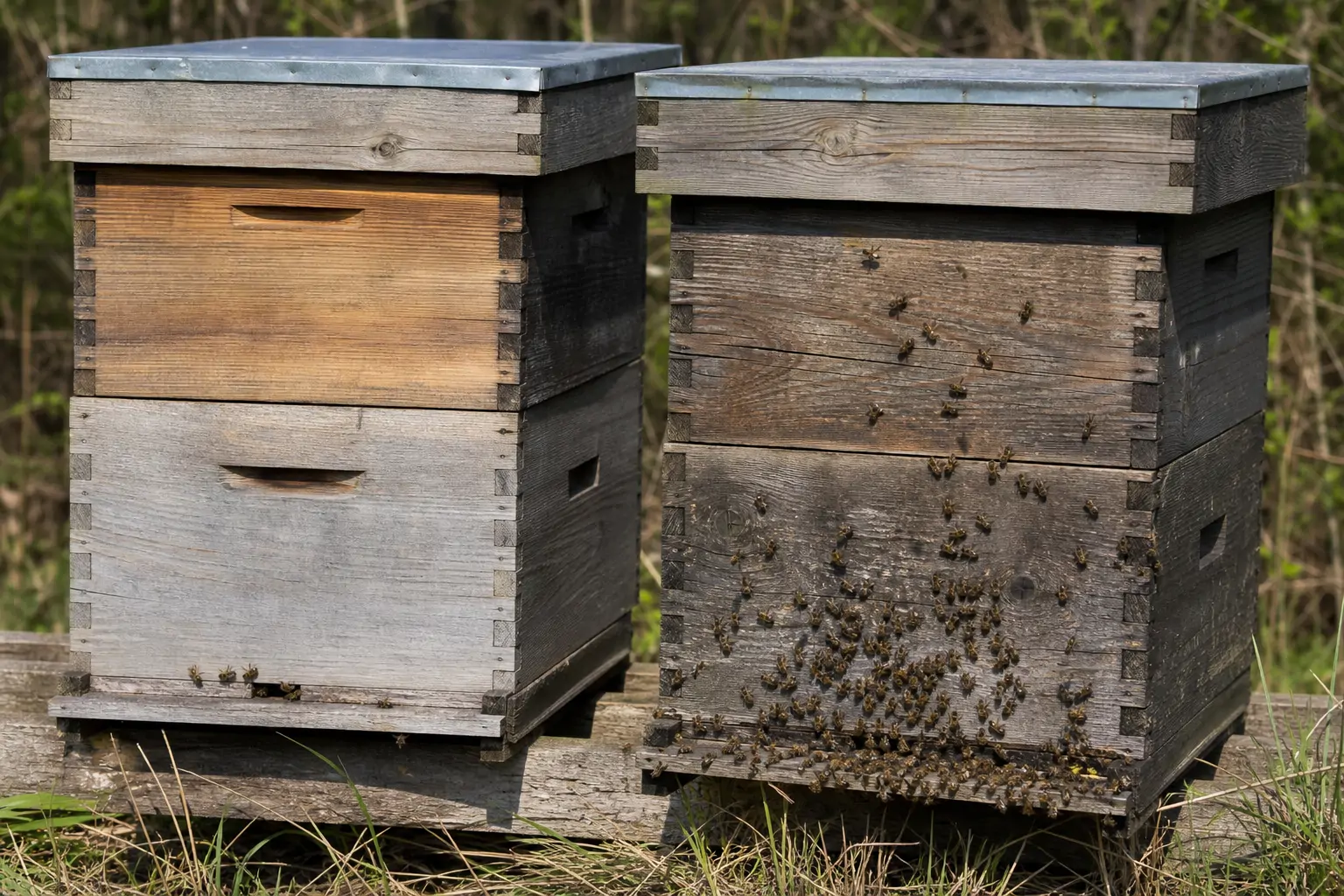
Transmission typically happens through nurse bees feeding larvae contaminated food, but robbing behavior is one of the most overlooked pathways. When a weak, dying colony is robbed by a stronger neighboring hive, the robbing bees can carry spore-laden honey back to their own colony, seeding a new infection. This is one of many reasons beekeepers are encouraged to watch closely for bee robbing signs near weakened hives and to reduce entrances or use robbing screens when a colony shows signs of decline. Buying used equipment, borrowing frames from another beekeeper, or feeding a struggling colony with honey of unknown origin are all common, everyday actions that can unintentionally introduce the disease.
Common Mistakes When Identifying Foulbrood in Bees
One frequent misstep is confusing American foulbrood with European foulbrood, a related but less severe bacterial disease. European foulbrood tends to kill larvae at a younger stage, before capping, and the dead larvae often appear twisted or discolored inside open cells rather than producing the telltale rope from capped cells. Another common mistake involves assuming that a strong-smelling hive automatically has foulbrood, when in reality odor is a poor standalone indicator. Beekeepers also sometimes destroy or discard suspect frames without documenting or reporting the case, which removes valuable evidence an inspector could use to confirm the diagnosis and understand how far the disease may have spread in the local area.
Takeaway: American foulbrood spreads mainly through contaminated equipment, robbing, and shared hive materials, which means prevention depends as much on hygiene and vigilance as on treating any single sick colony.
When to Consult a Professional and What Happens Next
Because American foulbrood is a reportable disease in most states, a confirmed or even strongly suspected case is not something to manage alone. Once the ropy test and visual signs point toward foulbrood, the next step is contacting a state or county apiary inspector, agricultural extension office, or a state department of agriculture bee program. Many regions require reporting by law, and inspectors can run confirmatory lab tests that a home test kit cannot reliably replicate. Attempting to self-diagnose and treat with antibiotics without professional confirmation is discouraged, since resistant strains have developed in some regions and misuse of antibiotics can mask symptoms without eliminating spores.
Reporting and Hive Destruction Protocols
In most jurisdictions, confirmed American foulbrood cases require burning the frames, and sometimes the entire hive body, along with careful decontamination of any tools or equipment that touched the infected colony. This sounds drastic, and it is, but it reflects just how persistent the spores are and how much damage a single overlooked case can cause to surrounding apiaries. Some states offer indemnity programs to offset the cost of destroyed equipment, which is worth asking about before assuming total financial loss. A qualified inspector can also help determine whether nearby hives need testing, since early-stage infections in neighboring colonies are easy to miss without a trained eye.
Any unusual larval death, persistent foul odor, or brood pattern irregularity that does not resolve after checking for common causes like a failing queen or nosema disease in bees may indicate a problem and should be evaluated by a qualified professional. Waiting to see if symptoms improve on their own is one of the costliest decisions a beekeeper can make with this particular disease.
Takeaway: because of legal reporting requirements and the destructive nature of confirmed cases, professional involvement should happen as soon as foulbrood is suspected, not after home remedies have already been tried.
American foulbrood remains one of the few bee diseases where hesitation genuinely costs more than action. Learning how to identify American foulbrood through the ropy test, sunken cappings, and irregular brood patterns gives backyard beekeepers a real chance to catch the problem before it spreads to other colonies or contaminates equipment for years to come.
Staying alert to these signs, understanding how the disease travels through robbing and shared equipment, and knowing when to bring in a trained inspector are the three habits that consistently separate beekeepers who lose a hive from those who lose an entire apiary.