Nucleus Hive vs Full Hive: Which One Should You Buy?
Nucleus Hive vs Full Hive: Which One Should You Buy?
Anyone shopping for their first colony eventually runs into the same fork in the road: buy a nucleus hive or start with a full-size colony. The decision affects everything that follows — how much you spend up front, how soon you can expect honey, how much risk you're taking on, and even how steep your learning curve will be during that first season.
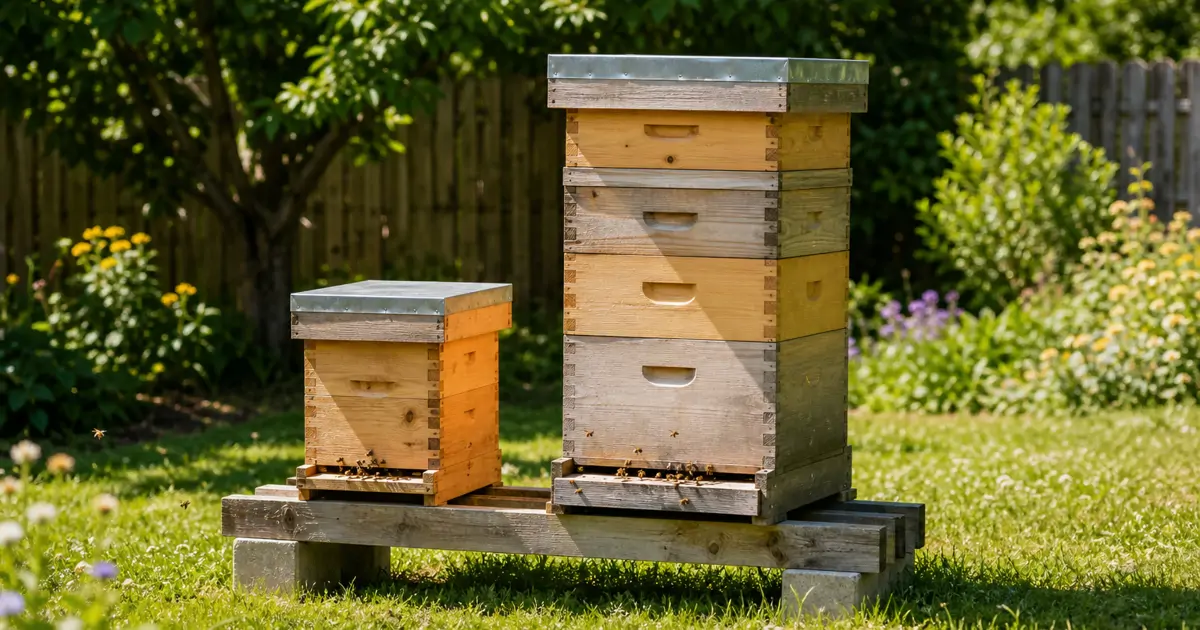
Beginners often assume bigger is better, reasoning that a full hive means more bees and a head start. That's not always true. A nucleus hive, or nuc, is a smaller, deliberately incomplete colony sold specifically as a starting point, while a full hive already has the population, comb, and internal organization of an established colony. Each comes with trade-offs that matter more in practice than they do on paper.
This guide breaks down what separates a nuc vs full colony in real terms — cost, timeline, risk of failure, and the kind of hands-on management each one demands — so the choice fits your goals rather than just your budget.
Nucleus Hive vs Full Hive: Comparing the Basics
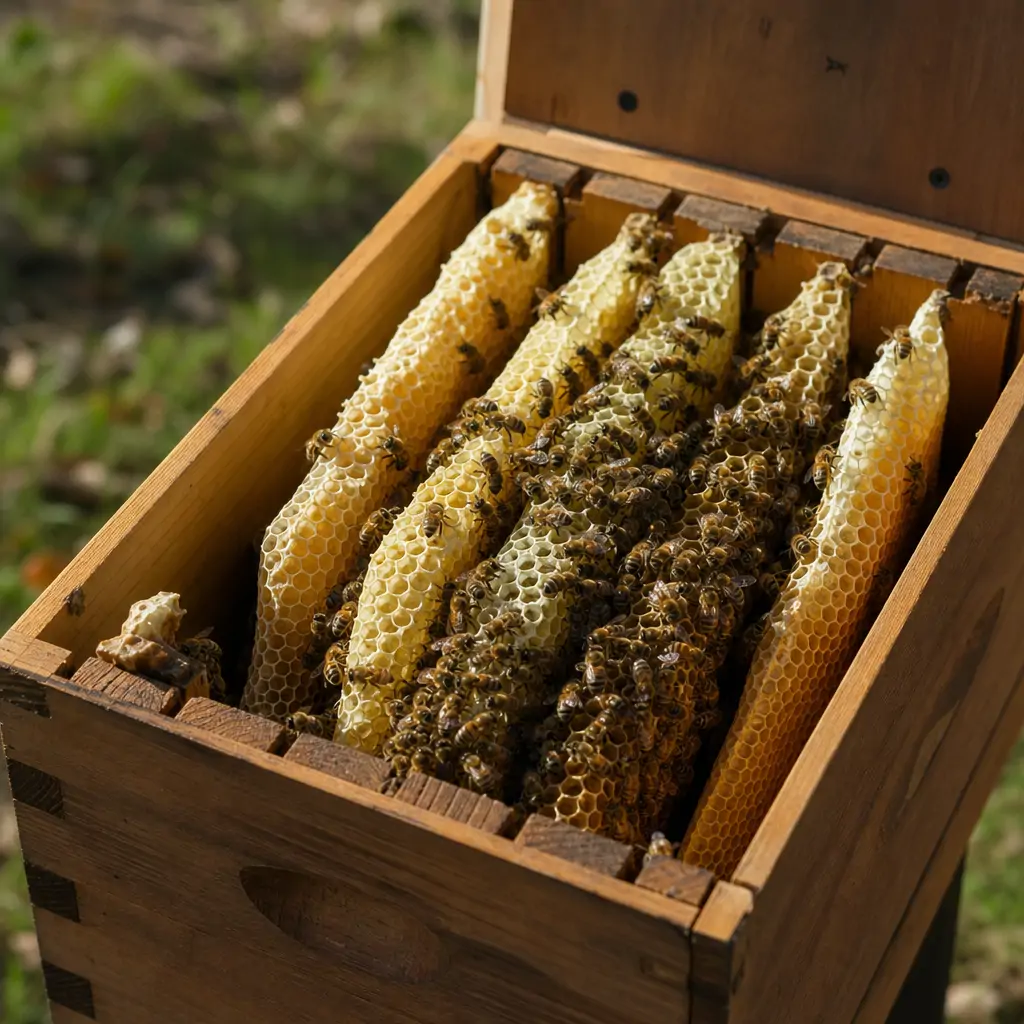
Before comparing prices or timelines, it helps to understand what is a nuc hive actually made of. A typical five-frame nuc arrives with comb already drawn out, brood in various stages, a laying queen, and enough worker bees to keep that brood warm and fed. It's essentially a starter colony in miniature, designed to be transferred into a full-size box where it can expand.
A full hive, by contrast, is already at or near its working capacity — often eight to ten frames of bees, comb spanning multiple boxes, established foraging patterns, and sometimes even honey stores from a previous season. Buying one usually means acquiring an entire operating colony, sometimes along with the equipment it's already living in.
Inside a Nucleus Hive
A nuc's small size is the point, not a limitation. Because the colony is compact, the queen can be monitored easily, comb can be inspected frame by frame without disturbing much of the population, and problems tend to show up early, while they're still manageable. The trade-off is patience — a nuc needs weeks to build up numbers before it behaves like a self-sufficient colony capable of storing surplus honey.
Inside a Full-Size Colony
A full hive skips that build-up phase. The comb is drawn, the workforce is established, and foraging is already happening at scale. That head start is appealing, but it also means any existing issues — a failing queen, disease, mite loads, or poor comb condition — arrive bundled in with the bees. Buying a full colony without inspecting it closely is one of the more common mistakes new beekeepers make, since problems that took a previous keeper months to develop can be invisible during a quick walkthrough.
| Factor | Nucleus Hive | Full Hive |
|---|---|---|
| Typical cost | Lower upfront investment | Higher upfront investment |
| Population size | Small, needs to build up | Established, working at capacity |
| Time to first honey harvest | Often delayed to the following season | Possible in the same season, conditions permitting |
| Ease of inspection | Simple, fewer frames to check | More time-consuming, more frames and boxes |
| Risk of inherited problems | Lower, colony is newer and more visible | Higher, existing issues may not be obvious |
| Equipment needs | Requires a hive body to transfer into | Usually already housed and ready |
Nucleus hives cost less and carry lower risk of hidden problems, while full hives save time but demand more scrutiny before purchase.
Which Option Works Best for Your Situation?
There's no universal answer here, but the decision usually comes down to timeline, budget, and comfort level with uncertainty. Someone who wants to learn the fundamentals of colony growth — comb building, brood pattern reading, queen behavior — often gets more educational value from a nuc, simply because everything happens at a scale that's easier to track.
When a Nuc Makes Sense
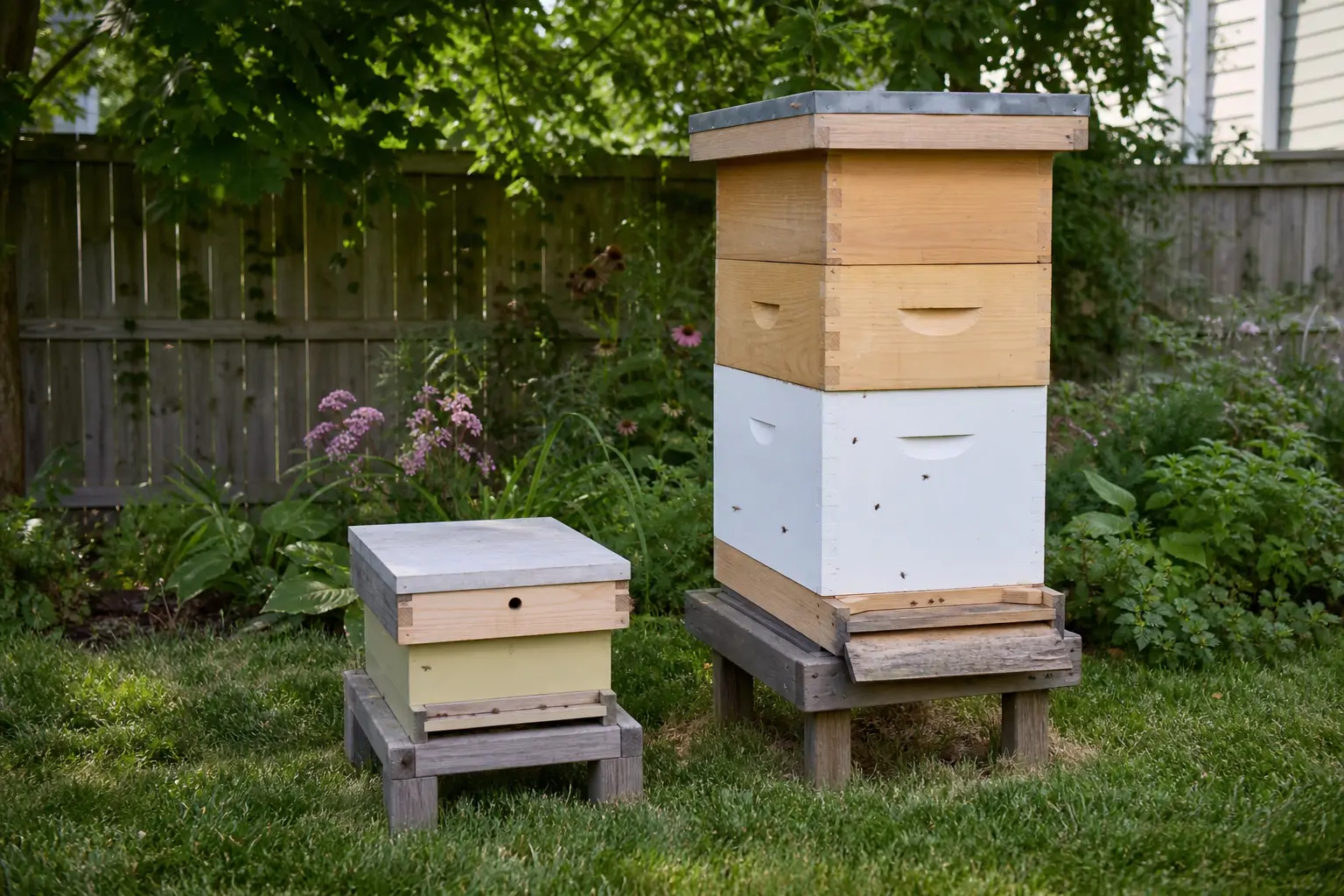
A nuc tends to suit beginners who aren't in a rush for honey and want to watch a colony develop from a manageable starting point. It also appeals to anyone replacing a hive that didn't survive winter, since a nuc lets them rebuild without committing to the price of a full colony again. The one caveat: nucs are usually sold in spring, and timing matters. A nuc installed too late in the season may not build enough population or stores to survive its first winter, which is a frequently overlooked consideration among first-time buyers eager to get started immediately.
When a Full Hive Is the Smarter Start
A full hive is often the better choice for someone who wants bees actively producing this season, or who is short on the patience required to wait out a nuc's build-up period. It also suits beekeepers relocating an existing operation, since buying an established colony effectively skips the startup phase entirely. This is closely tied to decisions around migratory vs permanent hives, since a full colony that's already settled into a stationary setup may not transport as easily as a smaller nuc would.
Choose a nuc for a slower, lower-risk introduction to beekeeping; choose a full hive when speed matters more than starting small.
Advantages and Disadvantages of Each Approach
Cost is the most obvious difference, but it isn't the only one worth weighing. A nuc's lower price reflects the fact that you're buying potential rather than a finished product — you're paying less because there's more work and waiting ahead of you. A full hive's higher price reflects convenience, but that convenience only pays off if the colony you're buying is genuinely healthy.
One frequently overlooked factor is equipment compatibility. A nucleus hive vs full hive purchase isn't just about the bees — it's also about what you already own or still need to buy. Frame sizes, box dimensions, and even the choice between beehive material wood vs plastic frames can affect whether a nuc transfers smoothly into your existing setup or requires new equipment altogether. Buyers sometimes overlook this and end up with a nuc that doesn't match the boxes waiting for it at home.
Seller reputation matters more with full hives than with nucs, simply because there's more established colony history to inherit, good or bad. In practice, this often means asking direct questions before buying: how old is the queen, has the colony been treated for mites recently, and how did it perform the previous season. A nuc carries less of that inherited history, which is part of why many beginners consider it the lower-risk entry point, even though it asks for more patience in return.
Weigh convenience against risk: a full hive buys you time, but only a careful inspection protects that investment, while a nuc trades speed for a gentler, more transparent introduction.
Deciding between a nucleus hive vs full hive isn't really about which one is objectively better — it's about matching the option to your timeline, budget, and appetite for risk. Nucs reward patience and offer a clearer view into colony development, while full hives offer a faster start at the cost of inheriting whatever history comes with them.
Whichever route you choose, the decision fits into a larger set of choices every new beekeeper faces, from choosing a beehive type to deciding how that hive will be housed and managed long-term. Getting the nuc-versus-full-hive decision right simply gives that broader plan a stronger foundation to build on.